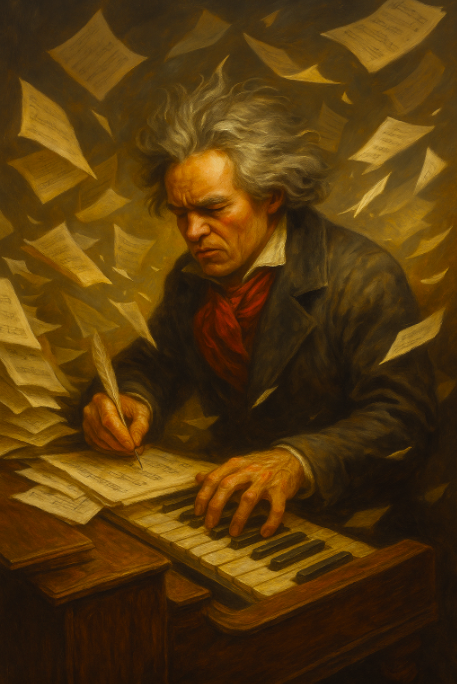
 by
by Short Summary of the Poem
The poem begins with one word — “Listen.” Because to know Beethoven, you don’t need his story, you just need his music.
As a child, Beethoven grew up in pain. His father abused him, beat him, and kept saying only one thing — “Not good enough.” No matter how perfectly he played, it was never enough.
He started losing his hearing even as a boy. Later, when he was completely deaf, he couldn’t hear applause, cheers, or even whispers of his name. But his music still shook people to their core — like fireworks exploding inside their bodies.
Each note felt addictive, like a drug for the senses. Beethoven bowed to no king or queen, but he bowed only to Music itself — even cutting the legs of his piano just to feel the vibrations through the floor.
His imagination was limitless. Musicians thought he was mad, but soon realised he was a genius. His music felt cosmic — like comets colliding and stars falling from the sky.
Beethoven’s mind turned raw human emotions into divine music. That’s why the poem reminds us again: “Listen.”
For a detailed explanation of the poem Beethoven and other poems of class12 ISC Syllabus, go to my channel, Beauty of Language.
Main Themes of the Poem
1. Resilience and determination
- Overcoming adversity: The central theme is Beethoven’s extraordinary resilience. Even though he was beaten by his father, he lost his hearing, he continued to create some of the most profound music in history.
- The spirit of perseverance: The poem shows Beethoven’s determination to continue his art even after losing one of the most important senses critical to his craft, which was hearing. He even cut the legs off his piano to feel the vibrations through the floor, which is a powerful image of his commitment.
2. The transformative power of art
- Art born from pain: Koyczan shows that art—here, music—can serve as both an emotional release and a source of transformation. For Beethoven, music became a safe escape from his abusive childhood and a way to express his inner struggles.
- Artistic genius: The poem honors and celebrates Beethoven’s creative genius, showing how his music could stir heavenly feelings in listeners. His gift for turning raw emotions into extremely high quality music has left a lasting legacy.
3. The tension between madness and genius
- A fine line: The poem shows the thin line between madness and genius. Musicians and critics first mocked Beethoven for his unusual ways, but after experiencing the power of his music, they were forced to recognize him as a true genius.
- Intimacy with silence: Koyczan shows the irony that Beethoven’s deafness gave him an “intimacy with silence,” and this allowed him to compose music in his mind that was paradoxically “perfect”.
4. A critique of judgment
- The folly of judgment: The poem suggests that to truly understand Beethoven, you don’t need the details of his life. By repeating the word “Listen” at the start and at the end, the poet reminds us that what really matters is his music.
- Rebellion against expectations: Beethoven’s rebellious spirit also challenged society’s norms. He never bowed to kings or queens, but he bowed to music, showing where his true devotion lay. He resisted his father’s harsh demands and society’s expectations, choosing instead to create music on his own terms.

Poetic Devices used in the Poem
1. Repetition– You already know why Repitition is used in any poems. It is to put emphasis on a certain idea or a certain fact. here also it is the same.
- “Beethoven“: In the poem Beethoven is repeated frequently. It is to remind the reader of the central figure, a vulnerable child who became a musical giant.
- “Not good enough“: This refrain of Beethoven’s father is repeated to show the constant, soul-crushing pressure that the composer faced. Even after he achieved success, this phrase echoed in his mind.
- “Listen“: This word is used as a command at the beginning and end of the poem, emphasizing that the most important way to know Beethoven is through his music, not his biography.
2. Metaphor– This is the poetic device used to make comaprison without using like or as.
- “Let the music invade their nervous system like an Armada marching through firing cannon balls”. It portrays the overwhelming, immersive power of Beethoven’s compositions. Here the usic is comared with an army.
- The lines “his fingers cramped up like the gnarled roots of tree trunks” show the exhaustion and torture Beethoven experienced during his relentless practice.
- The “deaf have an intimacy with silence” is a paradoxical metaphor that suggests a deep, unique relationship with a world without sound.
3. Imagery– Koyczan uses powerful, multi-sensory imagery to create a vivid portrait of Beethoven’s life and music.
- Auditory imagery: References to the sounds of his music and the tormenting “broken record” of his father’s voice.
- Visual imagery: Describes his fingers as “gnarled roots” and his music creating cosmic collisions, with “stars began to fall from the sky”.
- Tactile imagery: Sensory descriptions that convey the feeling of the music, such as the vibrations felt through the floor when he “amputated the legs of his piano” to compose.
4. Personification– The poem gives human qualities to non-human things.
- “You see the deaf have an intimacy with silence”. Here silence is personified
- “It was like joy was a tangible thing, like you could touch it,” Here, joy is personified to make it a physical reality.
- “watch love and hate dance together“. Here, emotions are personified.
- The description of music invading the nervous system like an army is also a form of personification- Personification of music
5. Juxtaposition– The poem contrasts opposing ideas to highlight Beethoven’s struggles and triumphs.
- Abuse vs. genius: The poet contrasts the abusive childhood with the creation of divine, “heavenly” music.
- Sound vs. silence: The poem explores Beethoven’s unique relationship with silence as his hearing fails, yet his music becomes more powerful.
- Madness vs. genius: The poem raises the question of whether Beethoven’s eccentricities stemmed from madness or genius, ultimately concluding he was a genius.
6. Hyperbole- The poem uses exaggeration to emphasize the colossal impact of Beethoven’s music.
- The line about music “causing comets to collide, creating crescendos that were so loud they shook the constellations” is a clear example of hyperbole.
About the Poet
Shane L. Koyczan is a Canadian spoken word poet, writer, and member of the group Tons of Fun University. He is known for writing about issues like bullying, cancer, death, and eating disorders. He is most famous for the anti-bullying poem “To This Day” which has over 25 million views on YouTube.
Detailed Analysis
Poem
Listen.
His
father
made
a
habit
out
of
hitting
him.
See, some men drink, some men yell, some men hit their children.
This man did it all because I guess all men want their boys to be geniuses.

Explanation
So the poem starts with a command- “Listen”. It is done so that the reader can deeply and attentively listen to and soak into the emotional essence of Beethoven’s iconic music.
Question Suggestion-
This word Listen has been used very thoughtfully in the poem. There can be a question asked in this context that-
The poem begins and ends with the same word ‘Listen’ because ……………………
Ans: It has been done to emphasize the central message of the poem which is: to truly understand Beethoven and his life, you don’t need historical facts, you only need to listen to his music.
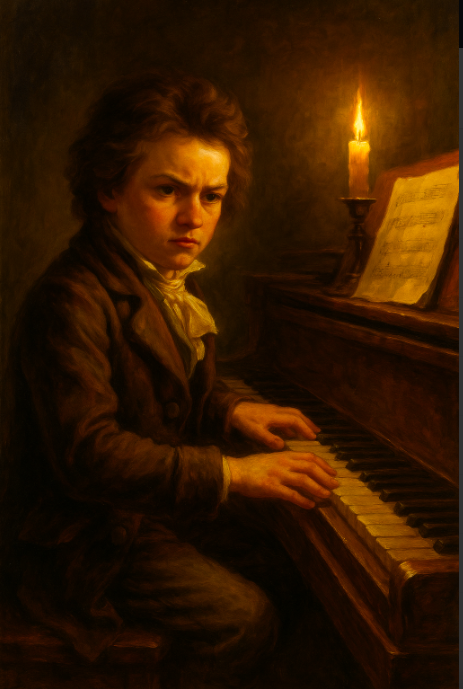
His father made a habit out of hitting him– Beethoven’s father often abused him, he often hit him, he often beat him. And he did so regularly because it was a way of dealing with his own problems. And this was the reason why Beethoven grew up in a home filled with fear, pain, and uncertainty.
Question Suggestion-
So in this context you can be asked question in the exam that According to the speaker of the poem Beethoven’s father used to hit him because ………….
Ans. he wanted his son to become a musical genius and he believed that this was the way to achieve it.
See, some men drink, some men yell, some men hit their children- The speaker explains that some troubled fathers deal with their anger and frustration in unhealthy ways, like drinking too much, shouting at their family, or even hurting their children. So Beethoven’s father dealt with his problems by beating his son.
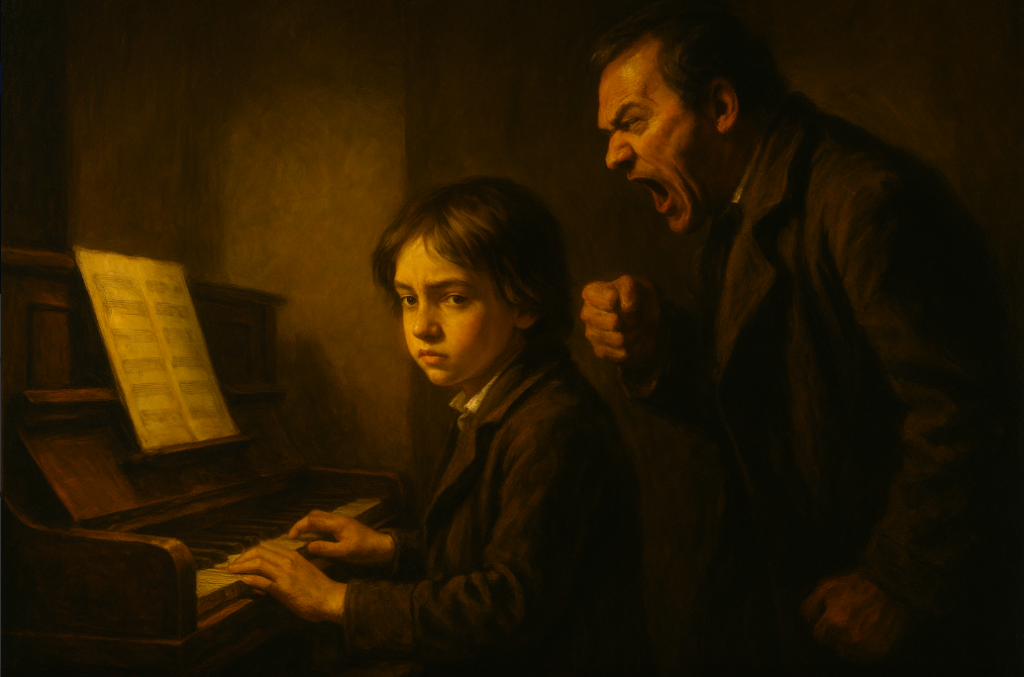
This man did it all because I guess all men want their boys to be geniuses- The speaker is telling that this man, that is, did everything. From drinking, to yelling, to beating his child. And he did it because he had very high ambitions for his son to become a great musical genius. He forced these unrealistic expectations on Beethoven through violence and harsh words, which caused harm instead of help.
Exam tip
You can be asked that- According to the speaker of the poem, ‘some men drink, some men yell, and some men hit their children’ because …………………
Ans: He believes that all men, in a misguided way, want their boys to be geniuses, and this is how they express that desire.
Poem
Beethoven.
Little
boy
living
in
a
house
where
a
name
meant
nothing.
Living in a house where mercy had to be earned through each perfect note tumbling
up through the roof to tickle the toes of angels who’s harps couldn’t hold
half the passion that was held in the hands of a young boy who was hard of hearing.
Explanation
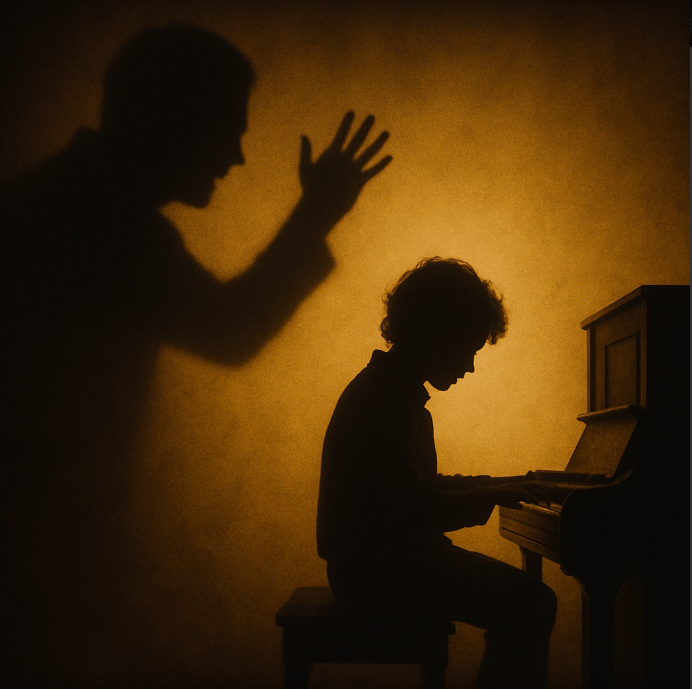
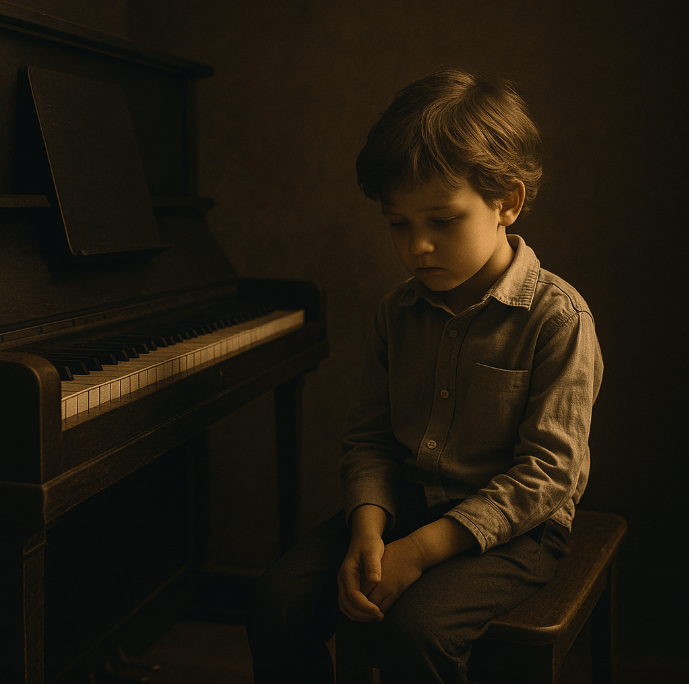
Beethoven. Little boy living in a house where a name meant nothing- Now the speaker mentions “Beethoven” as a young, small, and helpless boy who grew up in a home where his identity, self-worth, and humanity were ignored and crushed. He wasn’t valued for who he was or for his natural talents as a person.
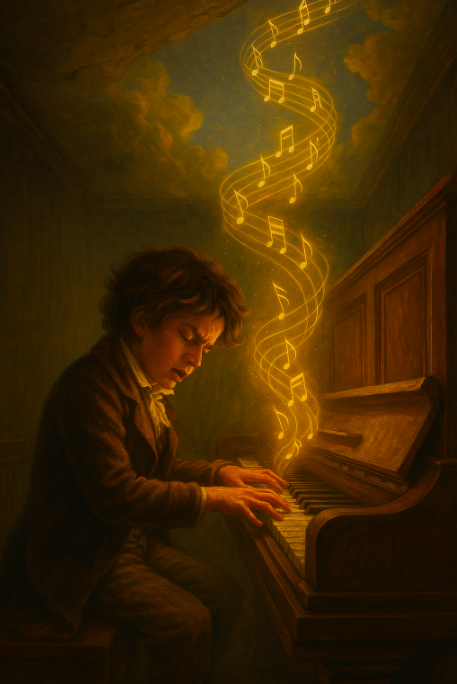
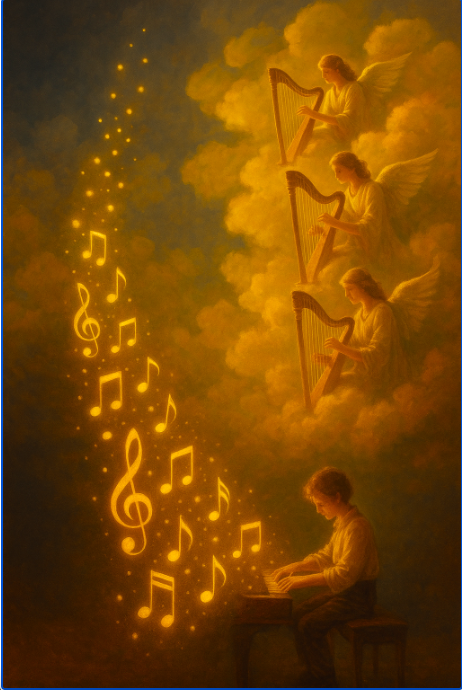
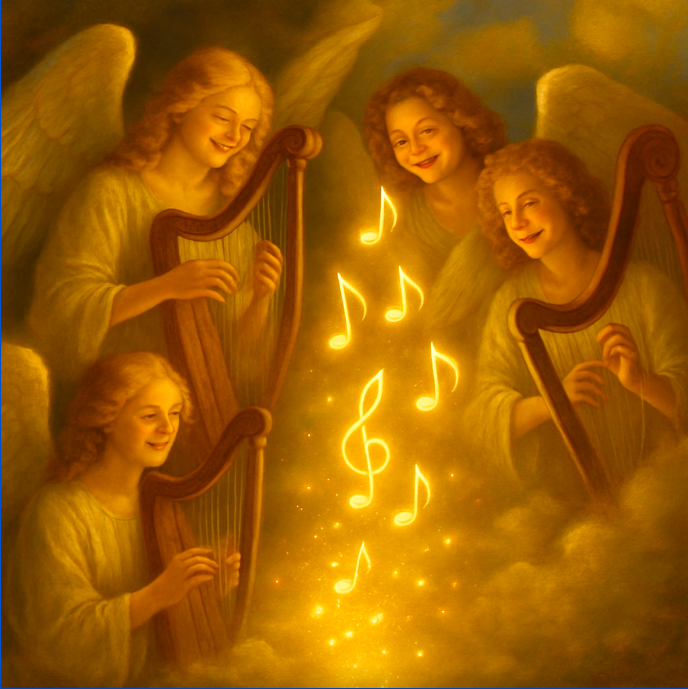
Living in a house where mercy had to be earned through each perfect note tumbling/ up through the roof to tickle the toes of angels who’s harps couldn’t hold half the passion that was held in the hands of a young boy who was hard of hearing- The speaker says that he was living in a house where mercy, where kindness could be earned only if the note was perfect tumbling up through the roof and touched the toes of angels. So the music he created is imagined as rising through the roof of the house and reaching the heavens, where it even amazed the angels playing their harps. Harps, you know it is a stringed musical instruments with strings of different lengths stretched across a triangular frame. The speaker says that the music of the angels did not have even half the passion and feeling that Beethoven had when HE played the musical instrument. And then in the last line, it is revealed that Beethoven had already started losing his sense of hearing as a child.
Previous Year Question
So this year, in 2025, there were questions asked in the boards exam. An MCQ question- Which of the following best describes Beethoven’s father’s attitude to him. Options were- He ws Rude, He was overbearing, he drove Beethoven to perfection and He wanted him to be successful.
Next you can be asked question like- According to the speaker of the poem, in Beethoven’s house mercy had to be earned because …………………
Ans: Beethoven’s father showed him mercy only when he played “perfect notes.” Kindness wasn’t given freely—it had to be earned through his music.
Poem
Beethoven.
Who
heard
his
father’s
anthem
every
time
he
put
finger
to
ivory
it
was
not
good
enough.
So
he
played
slowly.
Not
good
enough.
So
he
played
softly.
Not
good
enough.
So
he
played
strongly.
Not
good
enough.
And
when
he
could
play
no
more
and
his
fingers
cramped
up
like
the
gnarled
roots
of
tree
trunks
it
was
NOT
GOOD
ENOUGH.
Explanation
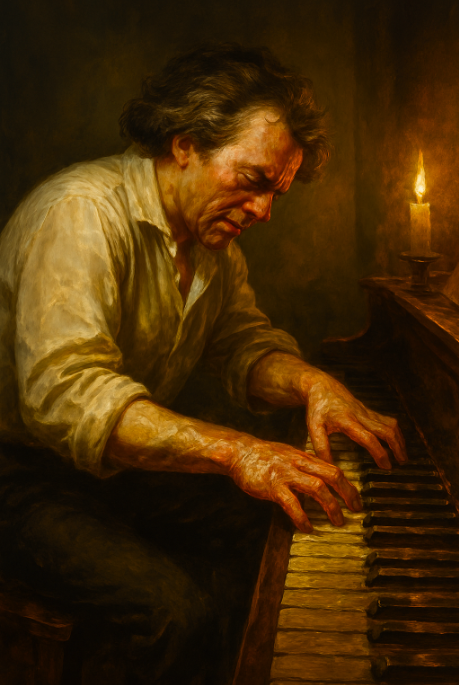
Now the poet is telling about Beethoven. So every single time, he put his finger on ivory, which means everytime he played piano, his father always had to say just one thing, and that was- NOT GOOD ENOUGH. Even though he played slowly, he heard the same thing-not good enough. He played softly, again the same thing- not good enough. So he played strongly, but again the same thing- not good enough. Even when Beethoven practised until he was completely exhausted—his fingers cramping painfully and his muscles twisting like old tree roots—his father still called his efforts “not good enough.” Gnarled means rough and having grown into a strange shape, because of old age or hard work. So here it was hard work. This shows the extreme and unfair pressure Beethoven had to endure.
So it has been mentioned here- “father’s anthem”, why? because he repeated the same thing again and again- not good enough. No matter how he played, how perfectly he played, it was never good enough for his father. He wanted him to reach impossible levels of perfection.
Exam tip:
You can be asked to Describe the relationship between Beethoven and his father as depicted in the poem. How did this strained relationship and constant criticism (the “not good enough” anthem) impact young Beethoven and his artistic development?
Poem
Beethoven.
A musician without his most precious tool: his eardrums
could no longer pound out rhythms for the symphonies playing in his mind
He couldn’t hear the audience’s clapping
couldn’t hear the people loving him
couldn’t hear the women in the front row whispering
Beethoven
As they let the music invade their nervous system like an Armada
marching through firing canon balls detonating every molecule
in their body into explosions of heavenly sensation
Each note leaving track marks over every inch of that body
making them ache for
one
more
hit.
He was an addiction.
Explanation
Now the poet says that Beethoven, a musician- he was without his most precious tool. And that precious tool was his eardrums. It means that he had completely lost the ability to hear. As he slowly went deaf, he could no longer hear or fully experience the rich details of the music, the symphonies, he imagined in his mind.
Beethoven’s deafness also cut him off, it isolated him from the joy of hearing his audience’s praise, applause, and cheers of “Beethoven!” He could not hear their claps, their cheers, or even their whispers of admiration.
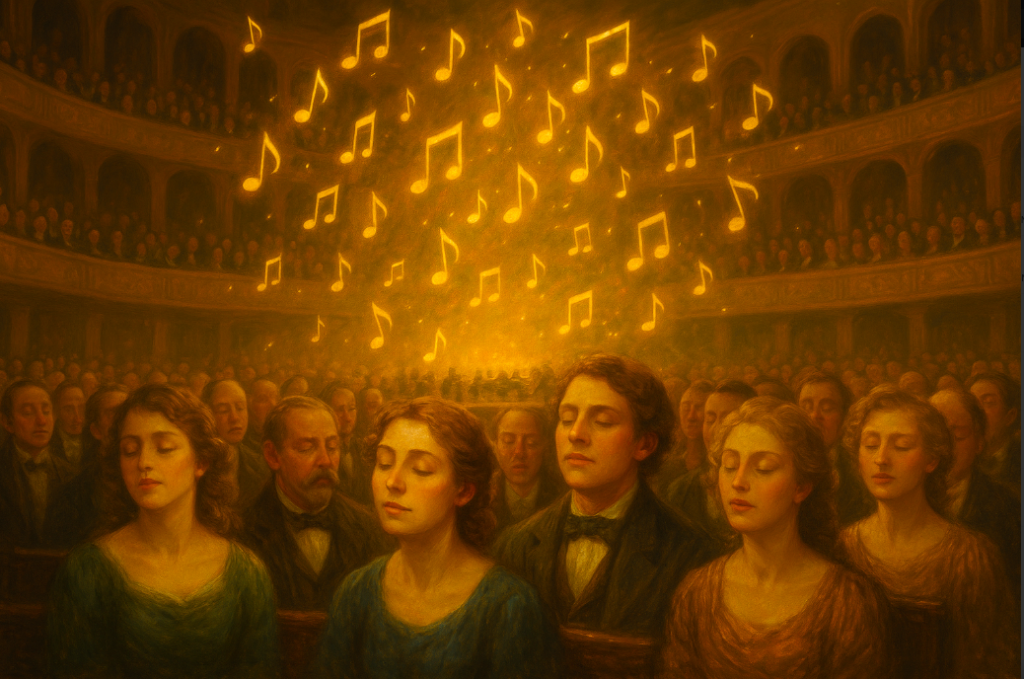
The music that he played washed over their nervous system like an invading naval Armada. Armada means a large fleet of armed ships sailing together- firing cannonballs one after the other that detonate within the body, detonate means explosion. Bombarding every molecule and nerve ending in cascading explosions of ecstatic, heavenly sensation. In this verse, the poet has used extremely vivid sensory imagery to portray how Beethoven’s music entered the bodies of his listeners. The dramatic effect it had on them was overwhelming and immersive.
Each note left a deep mark on the listener’s mind, making them want for just one more hit of the musical “drug” that is Beethoven. His music felt like a powerful and addictive rush for the senses.
Question Suggestion-
There was a time when Beethoven could not produce rhythms for the symphonies because …………………………
Ans: He had lost his hearing so he could not hear the physical sounds that he was creating.
Poem
And Kings, Queens, it didn’t matter
The man got down on his knees for no one,
but amputated the legs of his piano
so he could feel the vibrations through the floor
The man got down on his knees for music.
Explanation
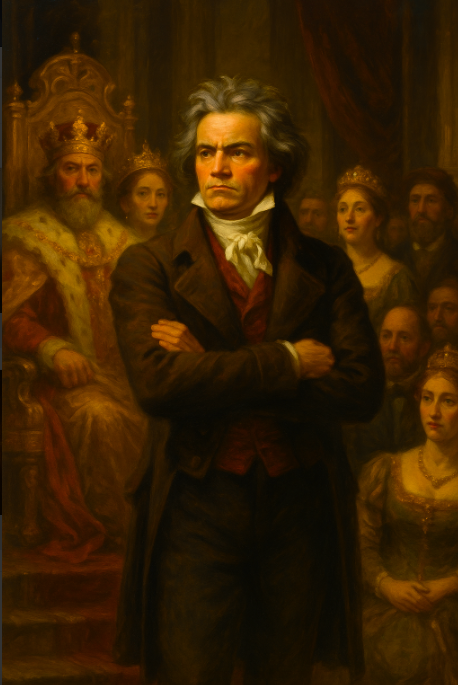
Whether it was king or the queen, it didn’t matter to him. He didn’t bow in front of them. He never kneeled in front of anyone. But what did he do? He amputated, means he cut off the legs of the piano and sat on his knees so that he could feel the vibrations of the music through the floor. So it was just music for which he knelt down. His only true devotion was to his musical art.

Question Suggestion-
Now here you can be asked that why did he cut off the legs of the piano?
Poem
And when the orchestra played his symphonies it was the echoes
of his father’s anthem repeating itself
like a broken record,
a broken record
It was not good enough.
So they played slowly.
Not good enough.
So they played softly.
Not good enough.
So they played strongly
NOT GOOD ENOUGH.
Explanation
And when the orchestra played his symphonies, a Symphony is a long piece of music that is written for a large orchestra. So when the orchestra played it, and even though they played it perfectly his father’s anthem echoed. What was that anthem that echoed? Yes, correct. It was- NOT GOOD ENOUGH! His father’s harsh voice kept repeating in his mind like a broken record, saying the same thing again and again. No matter how the orchestra played, whether they played slowly- his father’s voice echoed not good enough, whether they played softly, his father’s voice echoed not good enough or whether they played strongly-his father’s voice echoed NOT GOOOD ENOUGH!!! Something always felt lacking.
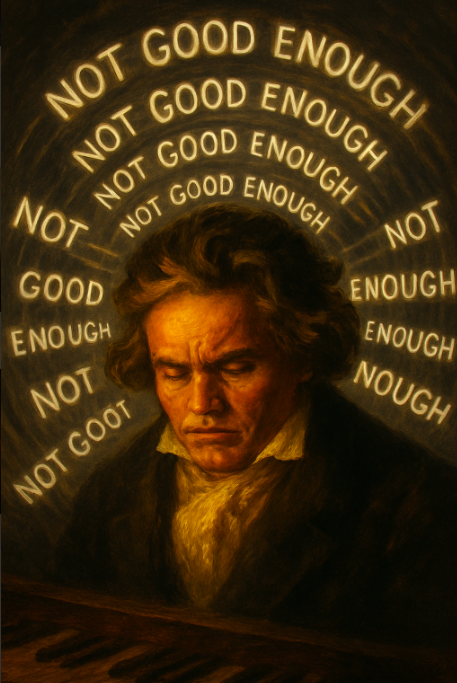
This shows how deep the impact of Beethoven’s father’s condemnations was on him, on his mind, that it echoed in his mind when the orchestra played the symphonies.
Question Suggestion-
What was the impact on the musicians who played his symphonies of his father’s continuous remarks that it was not good enough?
Poem
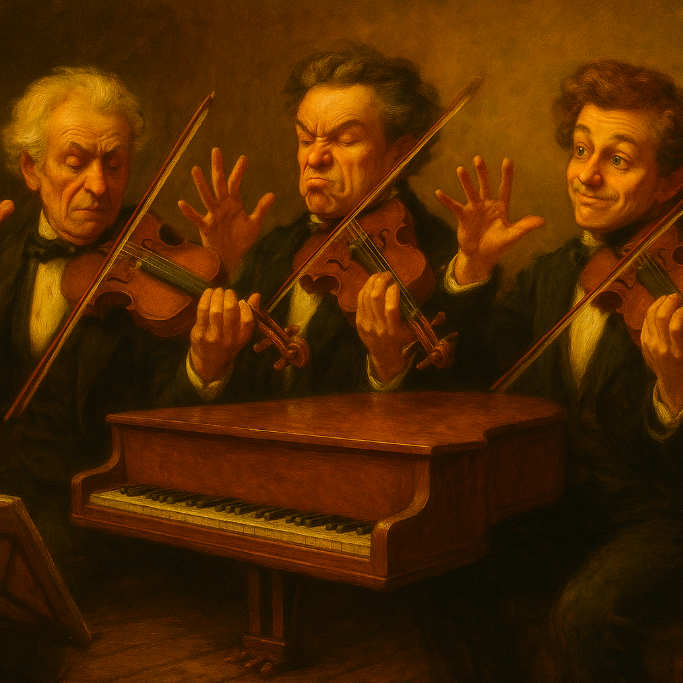
So they tried to mock the man, make fun of the madness
by mimicking the movements, holding their bows
a quarter of an inch above the strings not making a sound.
It was perfect.
Explanation
So the orchestra musicians, what did they do? They tried to mock the deaf Beethoven. They made fun of him by exaggerating their movements. They pretended to play by moving their bows just a quarter of an inch above the strings without making any sound. There was no real music. They only acted like they were playing. And surprisingly, to Beethoven, who was completely deaf, this silent imitation of producing the music felt completely perfect! It was perfect music for him.
Previous Year Question
So there was another question that was asked in the exam in this context that the musicians made fun of Beethoven’s madness because. And you have to state the reason.
Poem
You see the deaf have an intimacy with silence.
It’s there in their dreams.
And the musicians turn to one another not knowing
what to make of the man trying to calculate the distance
between madness and genius, realizing that Beethoven’s musical measurements
could take you the distances reaching past the Towers of Babylon,
turning solar systems into cymbals that crash together,
causing comets to collide, creating crescendos that were so loud
they shook the constellations until the stars began to fall from the sky
and it looked like the entire universe had begun to cry,
Distance must be an illusion.
The man MUST be a genius.
Beethoven.
His thoughts moving at the speed of sound.
Transforming emotion into music.
Explanation
Now in this stanza, the speaker explains that the people who are deaf they have a certain kind of intimacy, a close relationship with silence. Silence is always there with them. It is there even in their dreams. And this is the reason why even the orchestra’s silent act also seemed perfect music for Beethoven.
So when the musicians saw this side of Beethoven, they looked at one another because they couldn’t decide to decide whether he was mad or a genius. They realised that his imagination it was something that of a common man. It stretched far beyond human limits, reaching cosmic heights.In the poem, his music is described as having astronomical power—like solar systems crashing together, comets colliding to create thunderous crescendos, and stars shaking loose, falling from the sky. It looked as if the entire universe had started crying.

Beethoven’s imagination could reach across the stars, and that was the reason why the musicians believed that earthly distance itself must be an illusion. His vast and powerful vision proved him to be a true genius. His mind worked at an incredible speed. It was faster than sound. His music turned raw human emotions into music. And THIS felt absolutely divine and transcendent, that is, beyond or above the range of normal or physical human experience.
Exam tip
- Discuss the change in the other musicians’ perception of Beethoven, who were initially confused about whether he was a “genius or mad” but finally had to admit his greatness.
- Write a note on the vivid imagery used in the poem to describe Beethoven’s music, such as “musical measurements” that could “turn solar systems into cymbals”.
- The speaker of the poem alludes to the Towers of Babylon because …………………
Poem
And
for
a
moment
it
was
like
joy
was
a
tangible
thing,
like
you
could
touch
it.
Like
for
the
first
time
we
could
watch
love
and
hate
dance
together
in
a
waltz
of
such
precision
and
beauty
that
we
finally
understood
that
history
wasn’t
important
To
know
the
man
all
we
ever had to do was
Listen.

Explanation
The poet expresses that Beethoven’ s music was so enticing and it was so impactful that it even turned soe thing abstract as “Joy” into a tangible thng. Tangible means things that can be touched, seen and felt. His music was as if it was dance between Love and Hate- the dance of Waltz. Waltz is a type of ballroom which is known for its grace and beauty.
So at the end, the poet again says, he emphasizes on the fact that in order to know Beethoven you don’t have to know about his history or background. You just have to do one thing, and that is, Listen!!