
 by
by Short Summary of the Poem
“Small Towns and the River” by Mamang Dai is a very thoughtful poem that talks about life, death, and the human soul through the poet’s memories of her hometown. It beautifully shows the difference between how short human life is and how everlasting nature and traditions can be — making us think about what really gives meaning to our existence. It explores the themes of life and death through the contrasting imagery of small towns and the river. And that’s why the poem got this name.
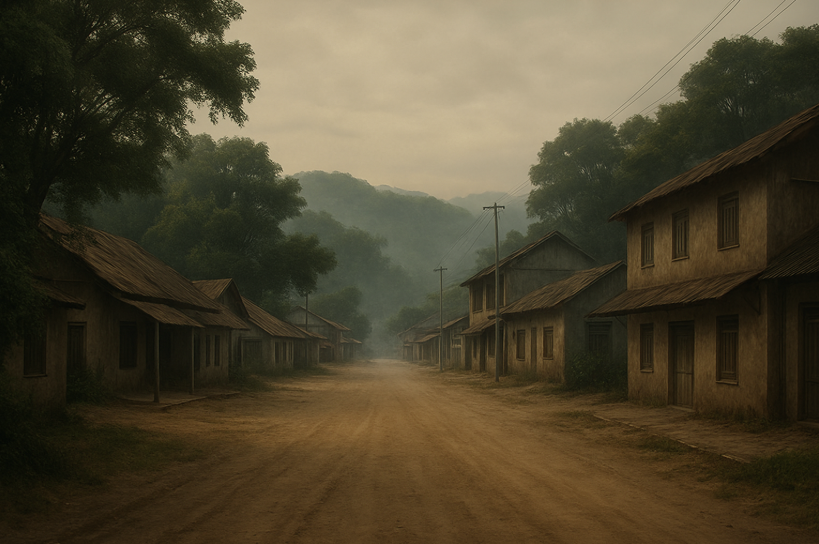
The poem begins with a powerful line — “Small towns always remind me of death.” This line immediately sets a very serious and emotional tone. The poet uses her quiet, unchanging hometown to show how death is always around in small communities. Every time someone dies, the whole town feels the loss, reminding everyone of how fragile life is, how temporary it is, how transient it is.
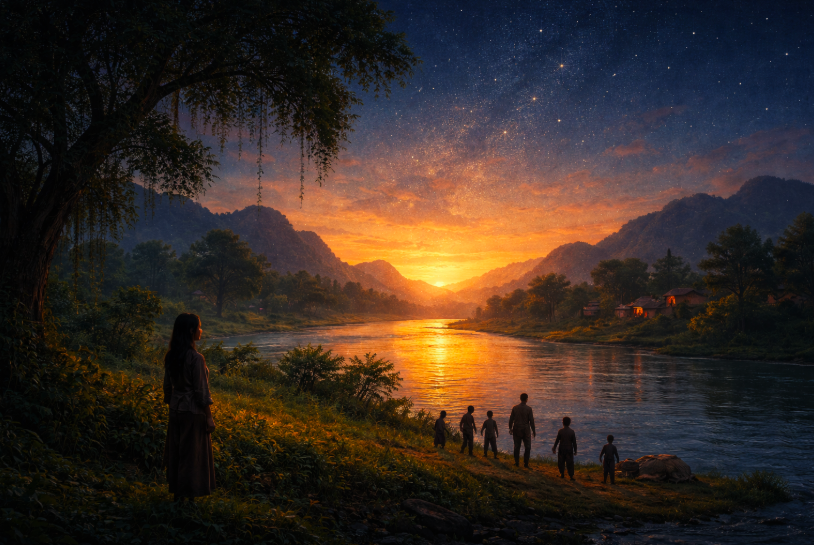
But while human lives come and go, rituals and nature stay the same. The river that flows by the town becomes a symbol of eternity. The poet gives it life, as if the river has a soul of its own. It keeps flowing endlessly, unlike people who eventually fade away.
In the later stanzas, the focus is shifted to the river, which is a symbol of continuity and immortality. While human lives fade away, the river keeps flowing — eternal, never-changing and everlasting. Through this, the poet reflects on the idea of eternal life and spiritual peace. This belief in an afterlife and the presence of God as a guiding force brings her comfort amidst the pain and impermanence, the transience, the temporality surrounding her.
The poem mentions a ritual where the dead are laid facing west, so their souls can rise in the east with the morning sun. This act symbolizes renewal and rebirth, showing the townspeople’s belief that the soul never really dies — it continues its journey, to the afterlife, to “walk with the gods.”
In the end, “Small Towns and the River” becomes a gentle, thoughtful reminder that while life is temporary, our beliefs, traditions, and the soul’s spirit connect us to something eternal.
For a detailed explanation of the poem Small Towns and The River and other poems of class12 ISC Syllabus, go to my channel, Beauty of Language.
Main Themes of the Poem
- Life vs. Death & Mortality: Small towns are shown as places where life feels slow and death is common, THIS creates a kind of sad atmosphere, while the river represents eternal life by flowing endlessly.
- Nature & Spirituality: The river is shown as a living, spiritual force that gives life and connects humans to something greater, unlike the small towns that are focused on temporary human worries.
- Tradition vs. Modernity: The poem expresses sadness over how modernization is slowly destroying traditional rituals and oral traditions, putting the cultural identity of small towns at risk.
- Memory & Identity: The river carries memories, and the poem shows how the poet’s bond with her homeland and its rituals shapes her identity and creates worries about the future.
- Human Experience & Nature’s Power: The poem shows how humans struggle within the powerful world of nature, using strong images of the river as both destructive and life-giving.
Poetic Devices used in the Poem
- Personification: In this figure of speech, human traits are given to non-human elements. The “hometown” lies calmly, the “wind” howls, and the “river” is described as having a “soul,” “knowing” things, and “holding its breath”.
- Metaphor: The figure of speech where indirect comparisons are used to deepen meaning. “Torrent of grief” compares the river’s flow to intense sorrow. The “house of the sun” serves as a metaphor for the afterlife or spiritual enlightenment.
- Simile: The figure of speech where direct comparisons are made using “like” or “as.” For example, the river “cuts through the land like a torrent of grief”.
- Paradox: The poem begins and ends with contradictory statements that reveal a deeper truth, such as “Small towns always remind me of death”.
- Transferred Epithet: An adjective usually used for a person is applied to an object. In “sad wreath of tuberoses,” the sadness of the mourners is transferred to the wreath.
- Alliteration: The repetition of consonant sounds at the start of words, such as the “m” sound in “mist on the mountaintops” or the “w” sound in “want to walk with the gods”.
- Refrain: It is the figure of speech where any particular line or phrase is repated to out emphasis. The line “The river has a soul” is repeated, emphasizing the river’s spiritual and eternal nature.
- Enjambment: It is the figure of speech where the lines end without any punctuation marks at the end. Many lines flow into the next without a pause or terminal punctuation, mirroring the continuous movement of a river.
About the Poet
Mamang Dai is a poet, novelist, journalist and former civil servant from Itanagar, Arunachal Pradesh. She is the author of The Legends of Pensam. The poem, Small Town And The River is one of the poems from her poetry book called River Poems. She received the Sahitya Akademi Award in 2017 for her novel, The Black Hill. She was also awarded the Padma Shri in 2011.
About the Poem
“Small Towns and the River” by Mamang Dai is a very thoughtful poem that talks about Life, Death, and the human soul through the poet’s memories of her hometown. It beautifully shows the difference between how short human life is and how everlasting nature and traditions can be — making us think about what really gives meaning to our existence. It explores the themes of life and death through the contrasting imagery of small towns and the river.
Previous Year Question
How does the poet depict the eternal nature of the river in the poem?
Small Towns and the River?
Write your answer in 100 – 150 words, incorporating the following details.
• Journey of the river through the land and the town
• Poet’s view of the river
Now a bit of extra information, more knowledge is never bad, right??
Since Mamang Dai is from Arunachal Pradesh, so she might be referring to the small towns in Arunachal Pradesh. Well, she can refer to any other small town in India as well. Basically, Mamang Dai could be talking about any small town of India with a river flowing through it.
Detailed Analysis of the Poem
Stanza 1
Small towns always remind me of death.
My hometown lies calmly amidst the trees,
it is always the same,
in summer or winter,
with the dust flying,
or the wind howling down the gorge.
Explanation
The poem starts with a paradox. Paradox, you might have heard, right? It means a situation or statement with two or more parts that seem strange or impossible together. For example, you can feel lonely in a crowd. Means that even when you are surrounded by people, you can still feel emotionally disconnected. So this is what paradox is.
The poet says that small towns always remind her of death, even though she lives surrounded by nature and trees. She expresses the timeless and unchanging nature of small towns, especially her own hometown. The images of dust flying in summer and wind howling in winter capture both the warmth and harshness of the place. And also which figure of speech has been used here? It is personification. Because dust and wind have been given the qualities of humans.
The “dust” mentioned by the poet symbolises death and decay. It shows how lifeless and stagnant the town feels. Also, the reference to dust flying also portrays, it also suggests the belief that when people die, they return to dust from which they were created.
The howling wind, it adds to this atmosphere of sadness and emptiness. Through this sound, the poet creates a gloomy and pessimistic tone. All these together set the stage for her reflections on mortality and the cycle of life. Here, which literary device has been used? It is onomatopoeia. The figure of speech where sound is expressed using words.
These dust flying in summer and wind howling in winter, they also reflect a sense of stillness and stagnation — a life that feels trapped in repetition. Like, roz subah uth ke wahi school ke liye ready hona, tuition jaana, ghar aana, wapas padhai karna, Beauty mam ke videos dekhna. You can relate to how boring it feels for you, right? Many must have even started thinking, bhai jaldi se 12th khtm kar ke bahar nikalna hai..Life here sucks!! Hai na? Sochte ho na aisa?
So the poet connects this feeling to death, not as actual dying, but as a metaphor for the absence of change, absence of growth, or renewal in small-town life.
Exam tip– Explain why the small towns remind the poet of death.
Stanza 2
Just the other day someone died.
In the dreadful silence we wept
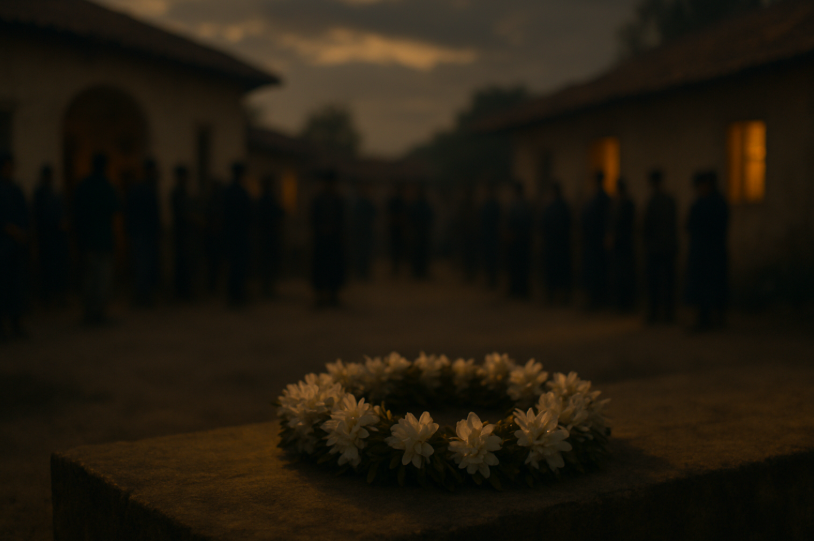
looking at the sad wreath of tuberoses.
Life and death, life and death,
only the rituals are permanent.
Explanation
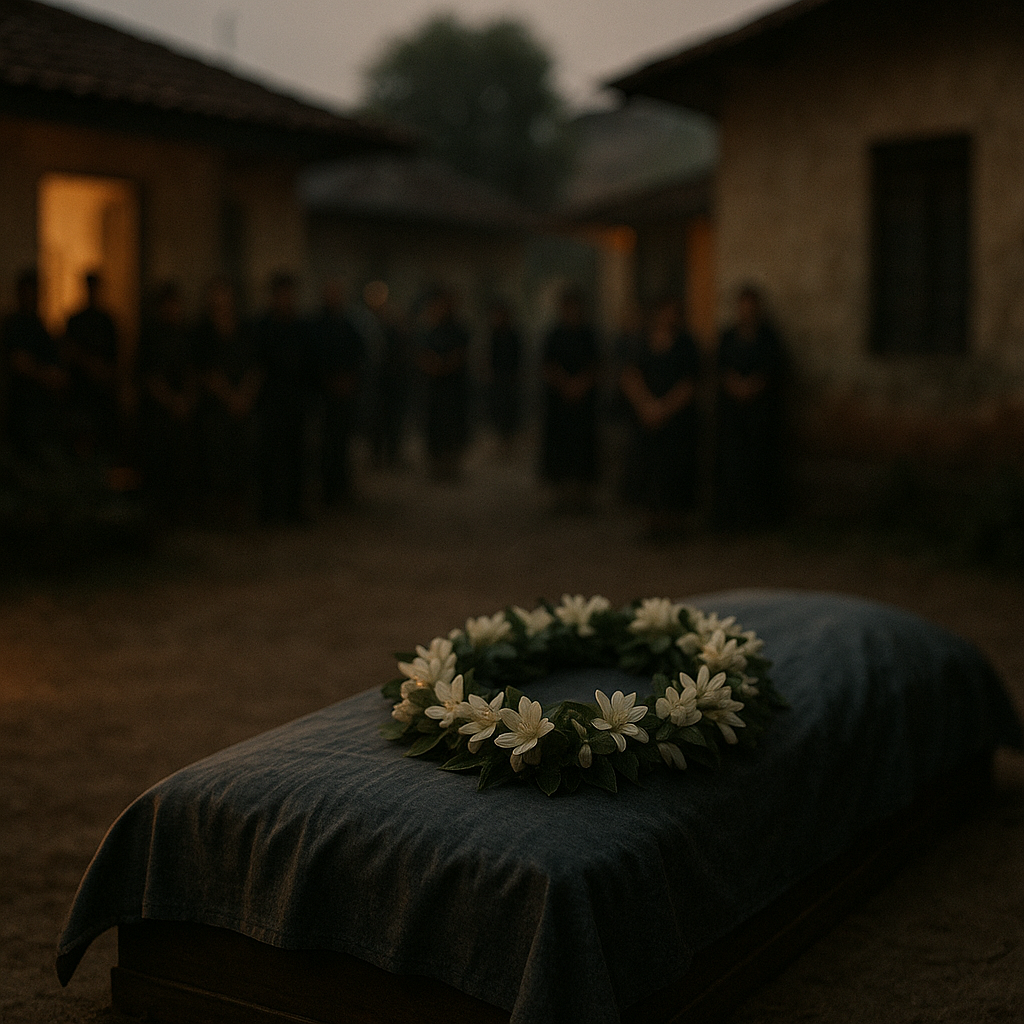
In this stanza, the poet talks about a recent death in the town. The death, which she perhaps witnessed or was a part of it. And in small towns as you know, that there are less people, and almost everyone knows every other person. So she says that when someone des, then the whole town mourns the death together. This death brings everyone together in shared grief. Seeing the wreath placed on the person’s chest makes her think about her own mortality — a reminder that life doesn’t last forever. The tuberose flower here is used as a symbol of death that acts like a silent messenger that announces someone’s death.
The phrases “dreadful silence” and “sad wreath of tuberoses” show how the whole community mourns the loss. You can notice that the words “Life and death” have been repeated. Why has it been done? It is to remind us that existence moves in a continuous cycle, where both life and death are natural parts of life. And this repetition is also done to emphasise this fact.
Next, the poet points out that rituals stay constant, even during the times when people don’t. And why is it so? Because these rituals have been passed down from one generation to another, and will continue to be passed on to future generations. These rituals, they become a way for the community to stay connected and find meaning through their collective experiences. The final lines expresses her disappointment and weariness, the tiredness that is shaped by witnessing so many deaths in her small town.
Exam tip
- What does the poet mean by this line, considering the cycle of “Life and death”?
- Discuss how Mamang Dai effectively contrasts the transient nature of human existence with the permanence and eternity of nature in the poem.
- Identify and explain the literary device used in “sad wreath of tuberoses.”
Stanza 3
The river has a soul.
In the summer it cuts through the land
like a torrent of grief. Sometimes,
sometimes, I think it holds its breath
seeking a land of fish and stars
Explanation
In the third stanza, the poet draws a contrast. Till now, we have seen that the previous stanzas were focused on death and mortality. Now this stanza celebrates the permanence of the river. The poet says that the river has a soul. She gives it a sense of life and spirit. She suggests that it’s more than just a physical body of water — it’s alive and has a spiritual presence. In this stanza the poet has personified the river.
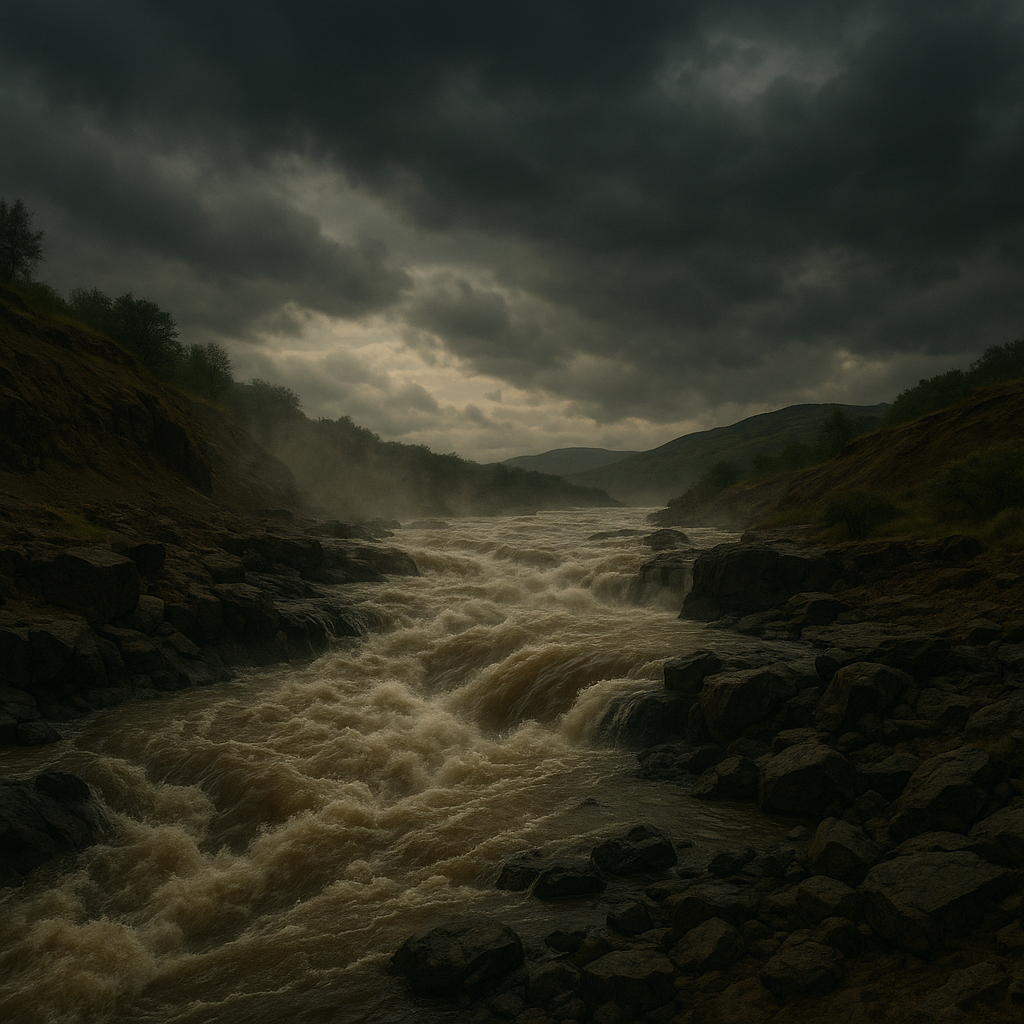
During summer, the river flows through the land like a “torrent of grief”. It carves its way through the land of a small town like a massive, unstoppable force of water that is venting its grief or extreme sorrow. It reflects the deep sadness and pain that often come with death. This is a metaphor where the river’s this activity is compared with a human being whose heart is filled with grief, and they pour out their grief in a storm of emotion.
The poet has used repetition herep Sometimes, sometimes. And also she again personifies the river — she imagines it as if it’s breathing, searching, pausing, holding its breath, and exploring, almost like a living being on a journey.
The line where she says that the river is looking for the “land of fish and stars” beautifully shows its endless movement and purpose. It symbolises the river’s journey toward a higher, spiritual realm, connecting the earthly and the divine.
Through this imagery, the poet portrays the river as a symbol of continuity and eternal flow. THIS is in contrast to the short and fragile lives of people in small towns.
Exam Tip
How does the poet justify the idea that “the river has a soul”?
Stanza 4
The river has a soul.
It knows, stretching past the town,
from the first drop of rain to dry earth
and mist on the mountaintops,
the river knows
the immortality of water.
Explanation
This stanza begings with a refrain, where she repeats the line which she has used in the third stanza- The river has a soul. These lines once again emphasise the river’s soulful nature. It is is not just a natural element but a living, conscious presence. It suggests that it carries a kind of ancient wisdom within it.
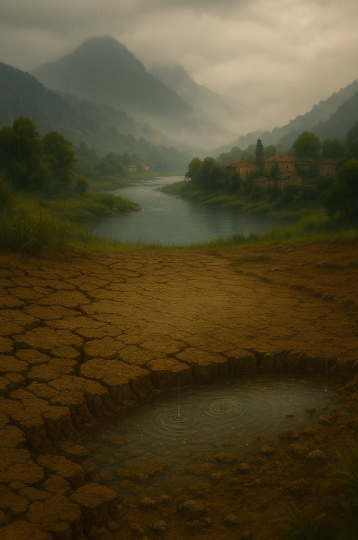
The river seems to understand everything around it — it knows the towns where death touches lives, the first drop of rain that brings the land back to life, and the mist that wraps around the mountains like a scarf. The form of river changes, but it never ceases to exist. It lives on and on and relflects the idea of immortality.
Through this, the poet shows how the river represents eternity and renewal. It reminds us that some forms of life never end — they simply transform and continue. She gives the river a divine and eternal quality, turning it into a symbol of life, wisdom, and continuity that stands beyond human mortality. So the poet shows a contrast between the static nature of small towns and the ever-moving nature of a river.
You can be asked in the essay-type question- Analyze the river as a central metaphor in the poem, explaining how it represents themes of continuity, grief, memory, and spiritual connection.

Exam tip
What is the significance of the river knowing “the immortality of water”?
Stanza 5
A shrine of happy pictures
marks the days of childhood.
Small towns grow with anxiety
for the future.
The dead are placed pointing west.
When the soul rises
it will walk into the golden east,
into the house of the sun.
Explanation
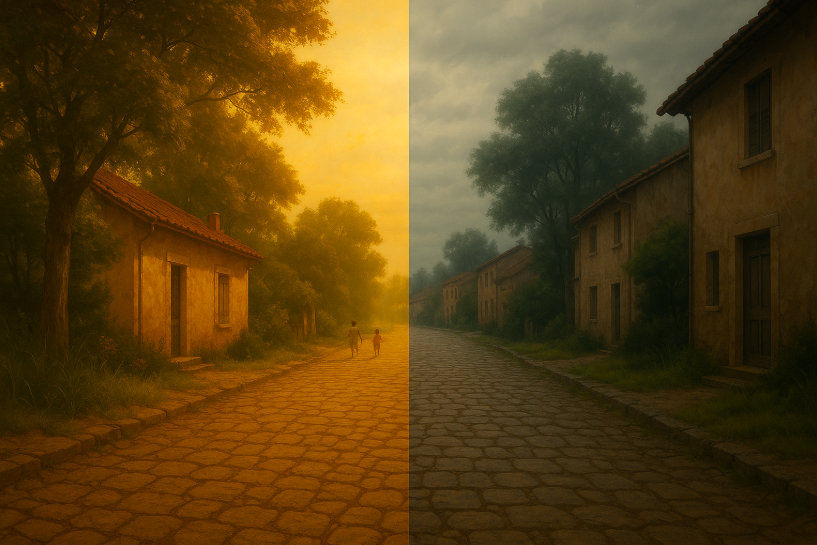
In this stanza, the poet recalls her childhood and calls it as a shrine or sacred space filled with joy, purity, and freedom from burdens. She feels nostalgic about it. But as time moves forward. the atmosphere of the small town, it gradually becomes clouded with the anxieties about the future. This presents a sharp contrast with the innocent past, the innocent childhood. The people of the small towns are worried about the future of their place. They are worried about the beauty of their towns and the threat to survival faced by their traditions,customs and rituals because of the impact of modernisation.
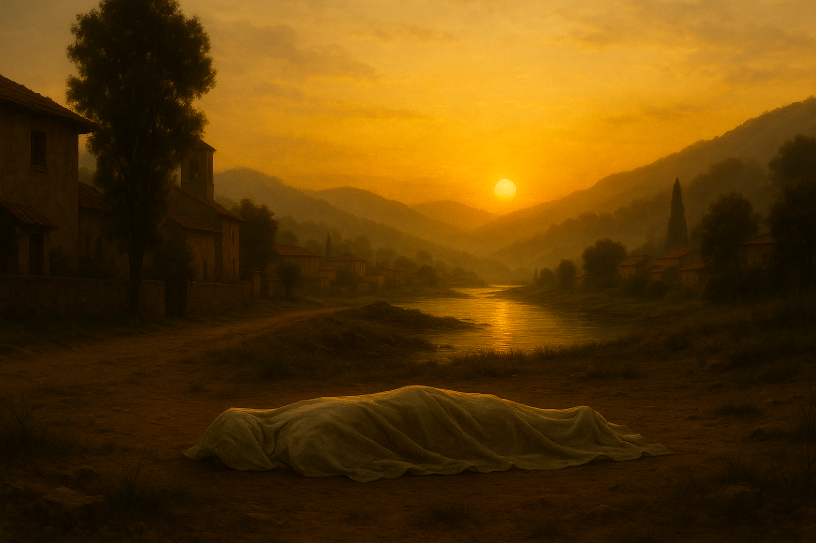
The poet also gives some examples of prevalent rituals. She mentions the ritual of placing the dead with their head pointing westwards. Why is it done so? It is done so that when their soul rises, it would go towards the “golden east”, which means heaven. It is a journey towards a new beginning, which represents the eternal cycle of day and night. She celebrates the rich culture and rituals of the North-East region. ‘The house of the sun’ is a kind of metaphor for enlightenment, heaven, or an afterlife where the soul finds its ultimate peace or perhaps even immortality.
However, the poet also expresses a feeling of sadness because these rituals and traditions that have been carried forward since time unknown are threatened by as I said, modernization. That is why she says: “Small towns grow with anxiety for the future.” Through this poem, the poet in fact tries to secure these rituals against the waves of time. The North-Eastern tribal communities have largely followed passing down their myths, folklores, conventions, and beliefs from one generation to another. There is no written literature or anything like that. But Mamang Dai tries to recall those memories from her “shrine of happy pictures” and tries to make her memory more permanent by giving it a written form in the form of this poem.
Exam tip
- Explain the cultural belief or custom of the Adi tribe reflected in these lines.
- What does the “house of the sun” symbolize?
Stanza 6
In the cool bamboo,
restored in sunlight,
life matters, like this.
Explanation
This stanza has a more positive and optimistic tone than the previous stanzas. She mentions bamboo plants probably because she is from Arunachal Pradesh and it grows abundantly there. So she says that the bamboo plant, it is cool. It has a special quality of being able to cool the surrounding air. THIS bamboo that cools the surrounding air, it can be revived or restored to
good health by exposing it to sunlight.
Bamboo here has been used as a metaphor for the human body, or you can say for life itself, which needs an external source to gain meaning. Just as bamboo is warmed and revitalised by sunlight, life receives its depth and vitality from something which is beyond the physical. And what is that? It is the soul that gives the human body life, meaning and purpose. This “sunlight” here symbolises the spirit or an inner essence.

Exam tip-
- Explain the symbolism of “cool bamboo” and “sunlight”.
- What message about life is conveyed in these lines?
Stanza 7
In small towns by the river
we all want to walk with the gods.
Explanation
In the final lines, the poet suggests that the people of the town, they crave a higher, more peaceful form of existence. Because they live beside the river, the river, which is a symbol of continuity and spiritual presence. They hope to rise above their ordinary lives and connect with something divine, if not in their present lives, then in the afterlife, that is, after death. This brings together the poem’s ideas about life, death, and the hope for an afterlife.
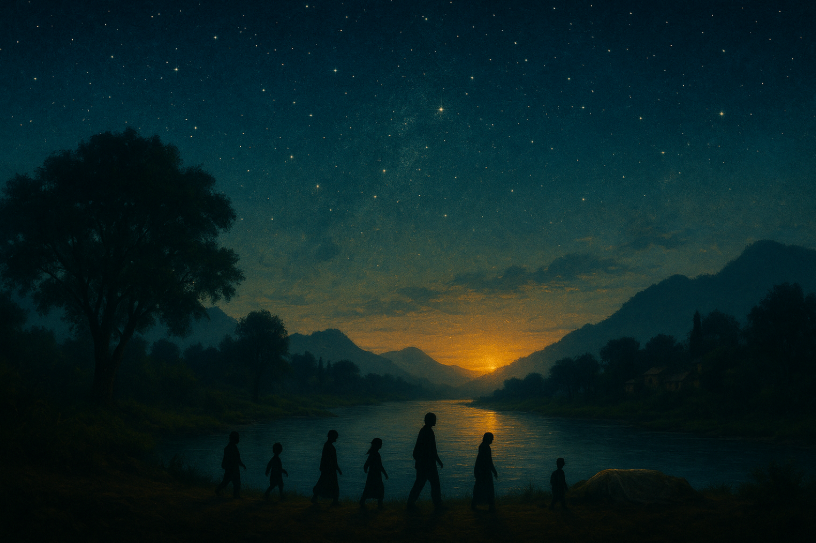
Now as you can notice that the poem started on a very gloomy kind of note, but then ended on an optimistic note.
This stanza also refers to Pantheism. Now, what is Pantheism? It is the belief that God and the universe are the same, and God exists in all natural things. So, when the poet says that people in small towns want to walk with the gods, she means being very closely connected with nature. People in small towns live together and connect with God through the rivers, trees, mountains, fish, stars and every being and entity that forms part of the natural world that is an inseparable part of the lives and the very existence of people in small towns.
You can be asked the essay type question that- Justify the appropriateness of the title “Small Towns and the River,” considering the central themes and imagery presented in the poem.