 by
by Drama | Class 10 | ICSE Syllabus | Julius Caesar | Short Explanation
Context: What Happened Before
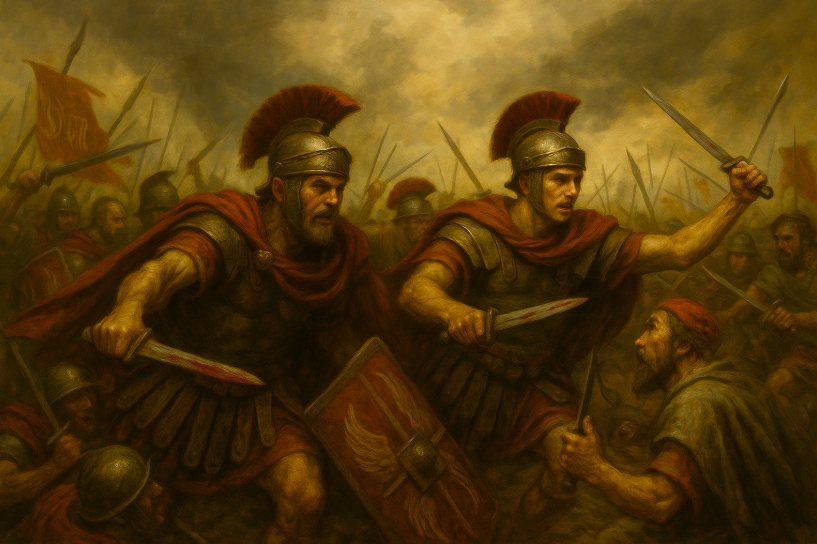
In Act 5, Scene 2, the great Battle of Philippi finally began.
Brutus saw a weak spot in Octavius’s army and quickly ordered his troops to attack.
At first, things seemed to go well for the conspirators but then things changed.
Now in Scene 3, the tides turn, and the battle starts to go against Cassius.
Summary
The scene opens on Cassius’s side of the battlefield, where chaos is breaking out.
Cassius’s forces are being pushed back by Antony’s troops, while Brutus’s men are fighting successfully elsewhere.
Cassius watches helplessly from a nearby hill with his friend Titinius and his loyal servant Pindarus.
He sends Titinius to find out if a nearby group of soldiers are friends or enemies.
As Titinius rides out, Cassius becomes nervous and tells Pindarus to climb up and report what he sees.
Pindarus mistakenly reports that Titinius has been captured by enemy soldiers — but in reality, the soldiers were Brutus’s men welcoming Titinius with cheers.
Believing his best friend has been taken, Cassius loses hope.
He says that this day — which was fhis birthday — has brought his destiny full circle, and he orders Pindarus to kill him with the same sword he used to stab Caesar.
Pindarus obeys, and Cassius dies, saying,
“Caesar, thou art revenged, even with the sword that killed thee.”
Moments later, Titinius returns, safe and victorious, carrying a wreath of victory for Cassius.
When he finds his friend dead, he is overcome with guilt and sorrow — and takes his own life with Cassius’s sword.
Then Brutus enters, sees their bodies, and mourns them deeply, saying they were “two mighty eagles” who flew together and have now fallen.
But even after all this he prepares to continue the fight.
Why This Scene Matters
- This is the turning point of the final battle.
- Both Cassius and Titinius die — not in defeat, but from misunderstanding and despair.
- Cassius’s death is deeply ironic: he dies because of false information, and on his birthday.
- The scene shows the emotional cost of war and how guilt, fear, and fate destroy even the strongest men.
- It also marks the beginning of Brutus’s downfall, which will come in the next scenes.