 by
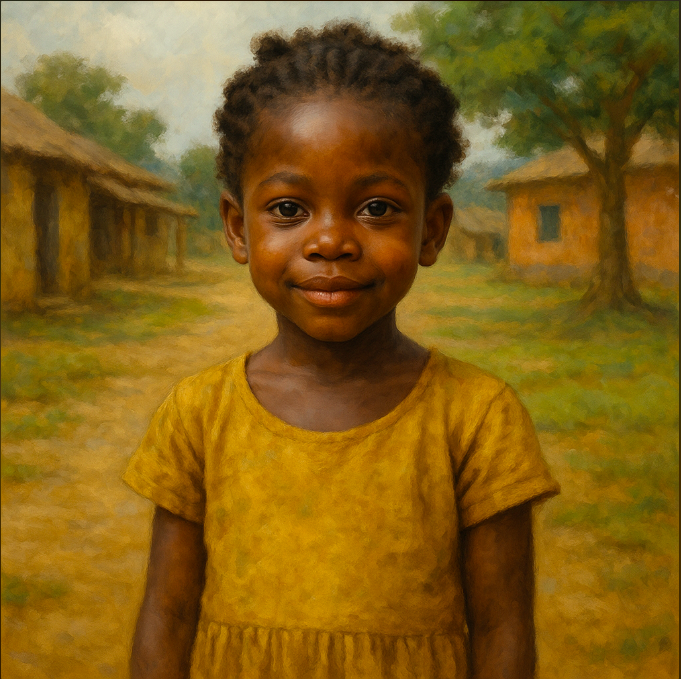
by Adjoa is a seven-year-old girl who lives in a big village called Hasodzi in Central Ghana, Africa. She stays with her grandmother, Nana, and her mother, Maami (Kaya).
Hasodzi is a green and fertile place, even when many other parts of Africa are dry. Whenever Adjoa does not finish her food, Nana reminds her- You Adjoa, you don’t know what life is about. You don’t know what problems there are in this life. She wants her to understand that food is precious, and she should not waste it.
For a quick summary of the story, visit my channel Beauty Of Language.
Adjoa says she also has a problem in life: she finds it hard to speak her thoughts. She says that first of all, it is very difficult to get Nana’s attention. hen she tells her that thing which she had taken a long time to figure out. And then what happens is that her Nana stops doing whatever she is doing, at once, and stares at her for a very long time with an open mouth. Then she bends and turns her slightly, bringing her ear close down towards her. And the she would say- Adjoa, you say what? And WHEN she repeated the whole thin,g then her grandmother would either say- never, never, but NEVER to repeat THAT, or she would immediately burst out laughing till tears ran down her cheeks. And sometimes it happened that she would say that thing to a few other ladies till they all burst out laughing, wiping their tears.
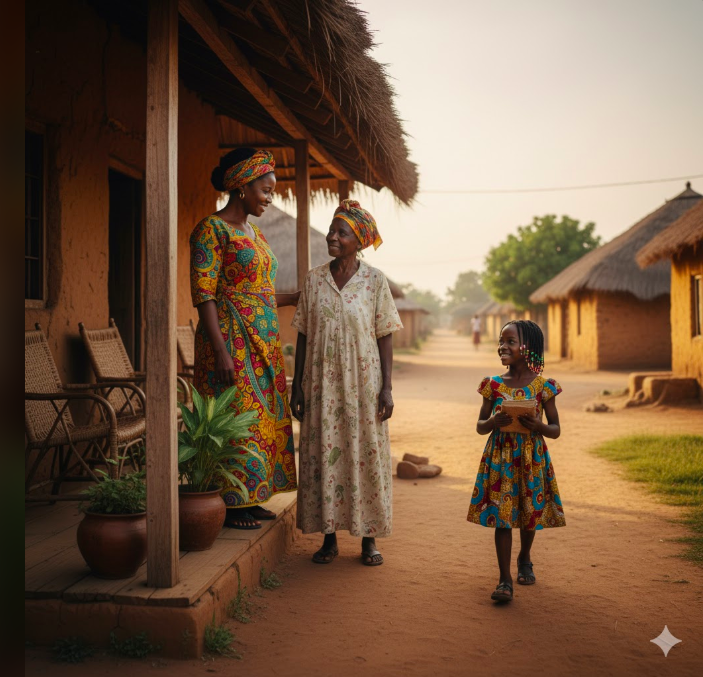
So basically, she says that whenever she shares her opinion, elders react in a way that makes her feel bad. Nana either scolds her and tells her never to say those words again, or she laughs loudly. Then Nana may repeat Adjoa’s words to another elder, and they also laugh. Because of this, Adjoa feels confused and decides that it is better not to speak what’s in her mind at all.
Next, Adjoa said that her two favourite people fight over one thing, and that was her legs. Nana has a problem with her legs, because they are too thin and too long for a girl. Then her daughter, that is, Adjoa’s mother, tries to make her understand and tries to explain to her that there are babies who are born without legs. But Nana still does not stop, she says- What kind of legs. And at THIS moment, her mother started weeping from inside. The weeping which her mother never heard, and even if she heard, she did not stop. And THIS thing always surprised Adjoa.
Adjoa likes Nana, but Nana complains a lot about Adjoa’s “thin legs.” Except for this part where Nana complains about her thin legs, Adjoa sees her as a good grown-up.
Nana says thatif a woman is born with two legs, they should be strong and fleshy, with well-built calves. Because only these kinds of legs can support wide, strong hips. And a woman needs strong hips if she wants to have children. On this- Adjoa’s mother just said- Oh, mother, and then both of them moved on with something else.
She even blames Maami for marrying a man whose daughter has thin legs. And she said about her father in a low voice, and thought that Adjoa didn’t hear it. But she did hear all of it, and she also guessed it from her mother’s expression that she had something about him. And then she again insisted that legs should be muscular, to support solid hips, so that she would be able to have children. All her argument stopped at this particular thing, because since Nana was a lady of traditional thinking, she thought that a girl has nothing else to do in life when she grows up other than having children.
Because Nana keeps saying this, Adjoa becomes curious. She wants to see what women’s legs look like, especially women who have had babies. But in her village, that was difficult. Older women always wear long cloth wraps, so she can’t see their legs.
Then she thought she might be able to check if she was allowed to bathe in the river in the evening, where the women bathe. But she was never allowed to go there. After a lot of begging, her mother and Nana only let her play in the shallow part of the river with her friends, other little girls like her. For proper bathing, she used a small bathhouse behind their hut.
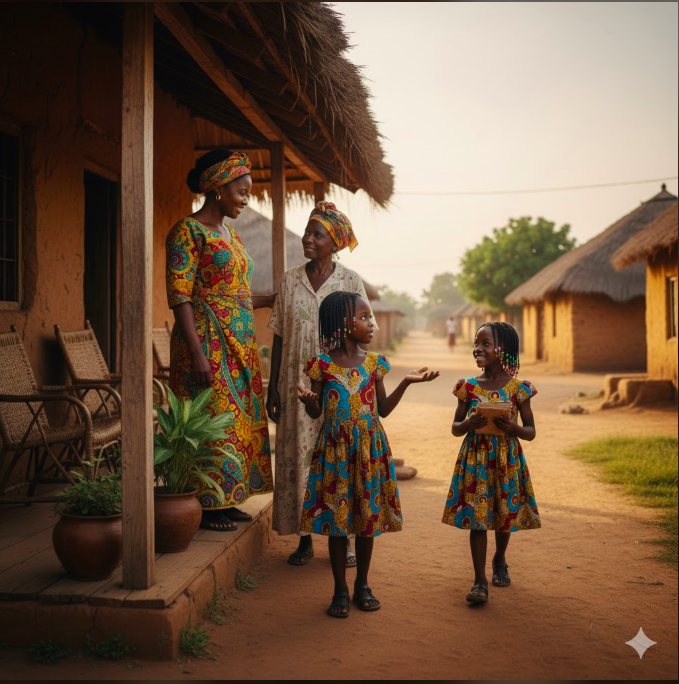
So the only bare legs she had really seen were the legs of girls her age, some older schoolgirls, and the legs of my mother and Nana. And she assumed her mother’s and Nana’s legs must be the “right kind,” because Nana had a child, and her mother also had a child.
She thought that her friends’ legs looked normal to her, but she still couldn’t tell if they were the kind that Nana described—strong and fleshy enough to support the hips a woman needs to have children.
The school is five kilometers away, and many students complain about the long walk. But Adjoa does not mind because she likes school. Walking such a long distance was never an issue for her.
Now, school was another topic that her Nana and Maami talked about a lot. Nana and Adjoa’s mother often talked about school, but they did not agree. Nana felt that going to school was a waste of time, though Adjoa did not fully understand why she thought that. Because not going to school must have never occurred to her mind.
On THIS, Adjoa’s mother disagreed strongly. She told Nana that because she never went to school, she felt stuck in “darkness”. She felt limited and unaware. She wanted her daughter to study so that Adjoa could at least learn to read and write her own name and do basic maths. She believed education would help Adjoa’s future, and she could still get married later if she wanted. And on this, her Nana just laughed and gave sarcastic comments.
Adjoa was very good at running and had been winning races for years, but she never told her family. Because she thought it wasn’t important enough to be told at home. One year, she was chosen to represent her school in the District Sports Week.
Nana and Maami were surprised and happy. Though Nana didn’t believe at first, she even went to her school to confirm if that was true. And fr the first time, Nana looked so pleased.
After that day, Adjoa often noticed Nana secretly looking at her legs in a strange way. Nana would stare for a moment, then pretend she was not looking.
All week, Nana personally washed Adjoa’s school uniform, which was very unusual. She even went to Mr Mensah’s house to borrow his charcoal iron again and again. She brought it home and kept ironing the uniform over and over, as if she wanted it to look absolutely perfect. Adjoa even jokes that if SHE had been the iron, she would have said, ENOUGH!!
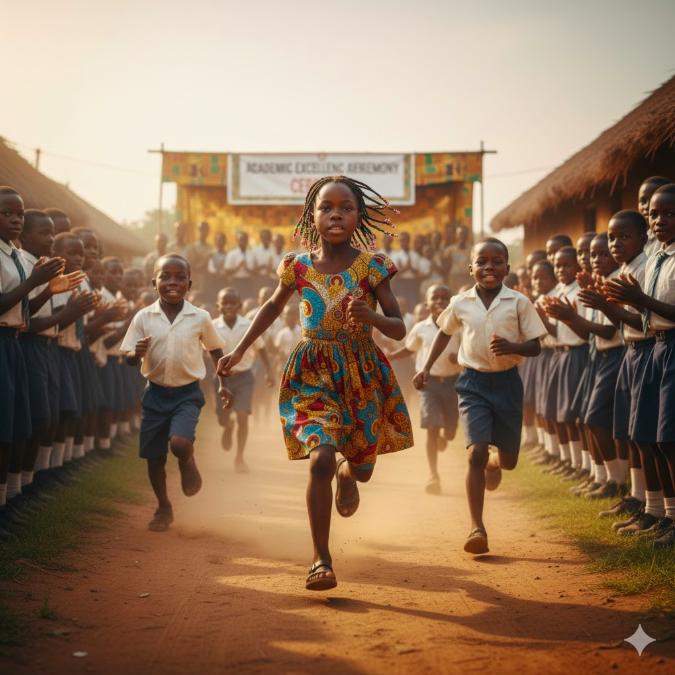
During that week, Adjoa really enjoyed wearing her school uniform. On the first afternoon, during the parade, the uniform caught the sunlight and looked brighter than everyone else’s. She felt sure Nana noticed it and liked how it looked.
Nana also came with them to town every afternoon during the district sports week. Each day, she chose a fresh set of her “old” clothes from a big brass bowl. These clothes were heavily starched, so they were very stiff—so stiff that they made a creaking sound when she walked.
Even though Nana came along, she always walked far behind the school children, as if she was not with them and was going somewhere else on her own.
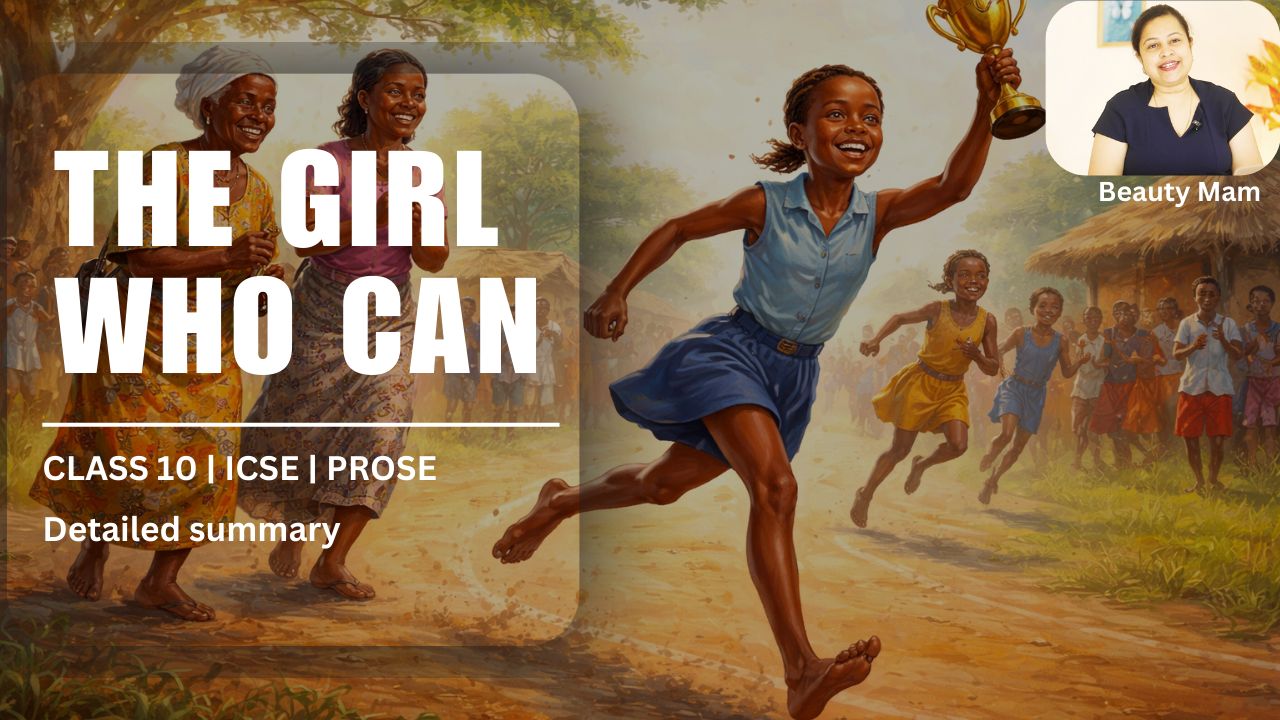
Adjoa won every race she ran for her school and also won the cup for the best all-round junior athlete.
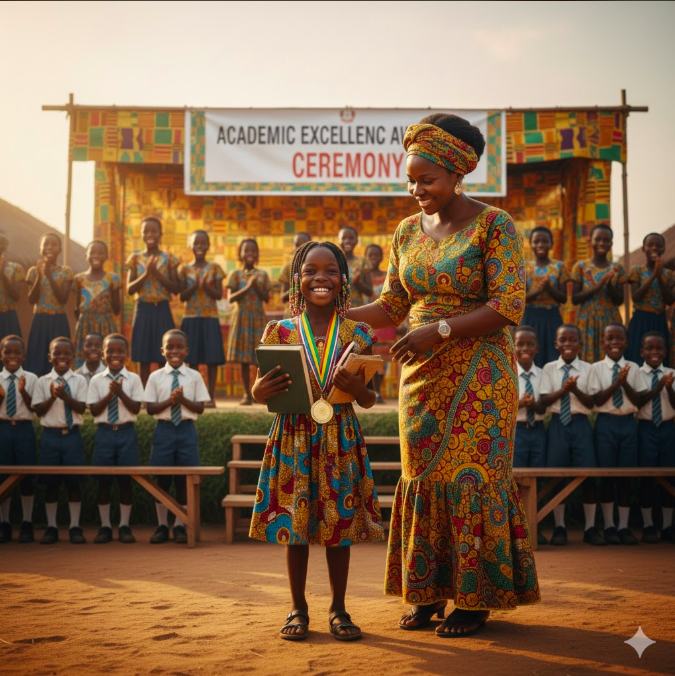
Nana had earlier said she didn’t care about such things, but NOW she felt differently. She decided to celebrate in her own way. She carried the shining cup on her back, the way people carry babies or very valuable, precious things. So this showed how proud she was.
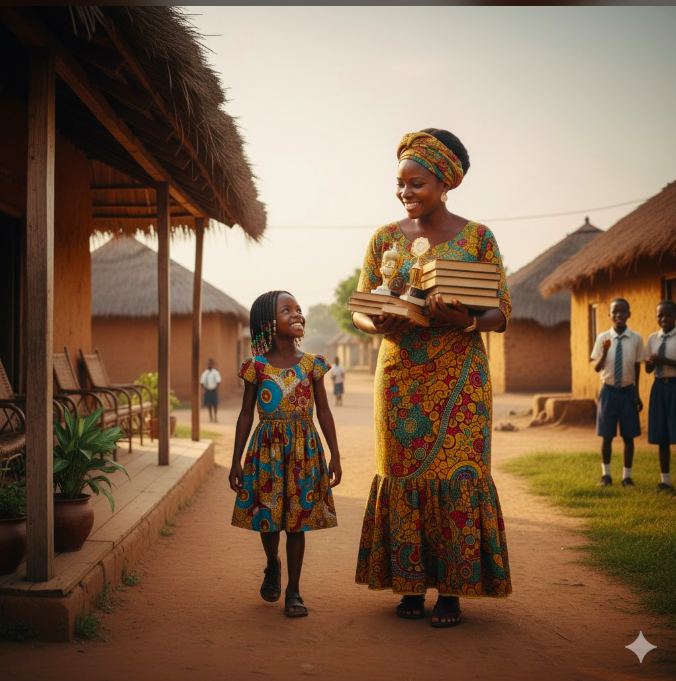
When they arrived in their village, she entered the compound of her house and showed Adjoa’s mother the cup before giving it back to the headmaster.
Adjoa feels that adults can be very confusing. At that moment, Nana was holding Adjoa on her lap and crying quietly. She kept whispering to herself that even “thin legs” can be useful. Nana said that even if legs are not thick and strong for carrying wide hips, they can still run, and also it can be precious, valuable.
Adjoa understood this thing because she had felt the same thing for a long time. She believed that legs should not be judged only by whether they can support hips for having babies. Legs can be useful in other ways, too. Legs can do other things too. But Adjoa was always scared to say this openly. She feared the adults would either scold her badly and tell her never to repeat it, or they would laugh at her until tears came out.
Now Adjoa felt it was better that Nana understood the truth through Adjoa’s success in running, even though Adjoa never planned to prove it like this.
Meanwhile, Adjoa’s mother stayed silent, as she usually did.
So basically, the story highlights how society judges women mainly by their bodies, expecting them to have “strong legs and wide hips” only to bear children. But Adjoa’s success in running with her thin legs changed Nana’s thinking and showed that girls can achieve way more when they get education and opportunities.
Question Suggestions for Boards Class 10
1) Reference-to-Context (Extract-based) questions
- Who is “Nana”? What is her opinion about Adjoa’s legs, and why does she think so?
- Why does Adjoa hesitate to speak her thoughts to adults? Describe the two common reactions she receives.
- Explain Nana’s statement about “legs that have meat on them” and “solid hips.” What belief does it show?
- Why does Adjoa want to see the legs of women who have had children? Why is it difficult for her?
- What change comes in Nana’s attitude after Adjoa’s sports achievement? Support your answer with details.
2) Very short questions (1 mark/objective)
- Name the village where Adjoa was born.
- What is Adjoa’s age?
- Who is Maami?
- Where do Adjoa and the girls bathe properly?
- What event does Adjoa participate in during district sports week?
3) Short answer questions (2 marks)
- What is Adjoa’s “main problem” according to her?
- How does Nana’s behaviour discourage Adjoa from expressing herself?
- Why does Adjoa enjoy school even though the walk is long?
- What does Adjoa’s mother believe about education, and why?
- Describe Nana’s reaction when Adjoa is selected for the district games.
- Why does Nana keep washing and ironing Adjoa’s uniform repeatedly? What does it suggest?
4) Long answer questions
- “The story shows how society limits girls by judging their bodies.” Explain with examples.
- How does Adjoa’s victory change Nana’s thinking? Why is this change important?
- Discuss the theme of education for girls in the story. Contrast Nana’s view and Maami’s view.
- Adjoa is quiet, but not weak. Explain how the story proves this.
- “Experience teaches better than arguments.” Show how this idea fits the ending.
5) Character sketch questions
- Write a character sketch of Nana (beliefs, behaviour, change by the end).
- Write a character sketch of Adjoa (her nature, fears, strengths, growth).
- Comment on Maami’s silence—why does she often stay quiet, and what does it show?
6) Theme / Message questions
- What is the central message of the story?
- How does the story challenge traditional gender expectations?
- What does the story suggest about a girl’s worth and potential beyond motherhood?
7) Title-based questions
- Why is the story titled “The Girl Who Can”?
- “Can” refers to more than running. Explain.
8) Narrative style / Point of view questions
- The story is told in the first person. How does this make the story more effective?
- How does Adjoa’s child-like voice help show the seriousness of the issue?
9) Symbolism / Irony questions
- What do Adjoa’s legs symbolise in the story?
- Explain the irony: Nana criticises Adjoa’s legs, but later feels proud because of what those legs can do.
- Why is Nana carrying the cup “like a baby” significant?
10) Creative writing
Even if not asked directly from the story, boards sometimes give story-based writing tasks:
- Write Adjoa’s diary entry after winning the cup.
- Write a letter from Maami to a friend about why girls should go to school.
- Write a speech on “Girls are capable of much more than society assumes,” using Adjoa as an example.
- Write a short dialogue between Nana and Maami after the race, showing Nana’s changed thinking.