 by
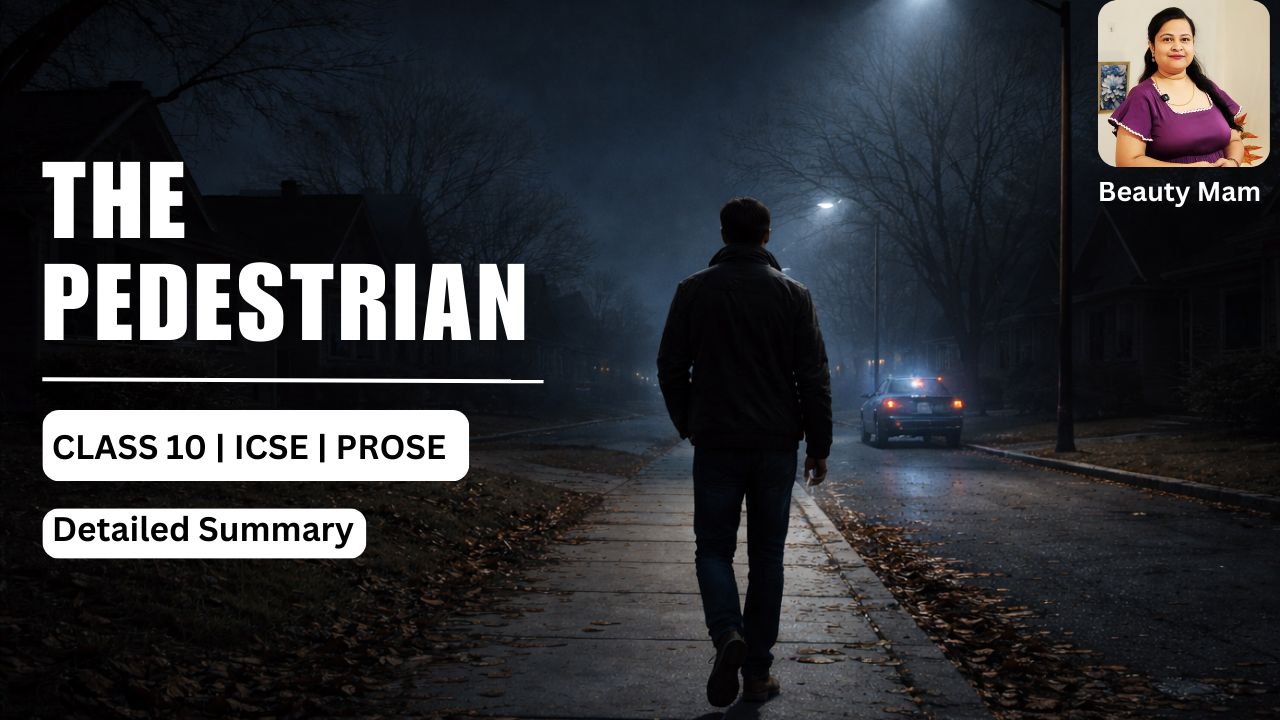
by On a cold evening in November, Leonard Mead left his house at eight o’clock to go for a walk. He walked along the concrete footpath and sometimes stepped on the uneven patches and edges of the grass. He enjoyed walking so much that he often stayed out for hours. Sometimes at crossroads, he would pause and decide which way to go.
For a quick summary of the story, visit my channel Beauty Of Language.
Since he was alone, so it didn’t matter which way he went. He simply chose a road and continued, his warm breath visible in the cold air like cigar smoke. Many nights, it happened that he returned home after midnight.
As he walked, he passed rows of small houses. Their windows were dark. It made the streets feel like a graveyard. Here and there, a faint light flickered inside, like a firefly’s glow. When the curtains were open, he could see the shadowy shapes of people sitting indoors. They looked ghost-like, and if a window was slightly open, he could even hear soft whispers and bits of conversation.
Whenever he heard these sounds, he would stop for a moment, tilt his head to listen, and then move ahead. And it had been a long time since he had switched to sneakers that made no noise when he walked in the street. Earlier, he wore shoes with harder heels, and they made a lot of noise. And because of this sound, many street dogs barked and chased him. THAT barking would wake the neighbourhood. Lights would turn on, people would notice a lone man walking at night, in the early November evening, and they would become suspicious.
So on this day, Mead was walking west, toward where the sea lay hidden beyond the city. The air was icy, and breathing it made his lungs burn, the feeling coming and going just like Christmas lights switching on and off. He loved being outdoors. He liked the soft sound of leaves under his feet, whistling quietly, and he would sometimes stop to examine fallen leaves—their veins and patterns—and even smell them.
As he passed houses, he sometimes called out casually, asking what the people inside were watching—channel 4, 7, or 9. He imagined they might be watching a cowboy show and wondered where the cowboys were rushing and all sorts of things.
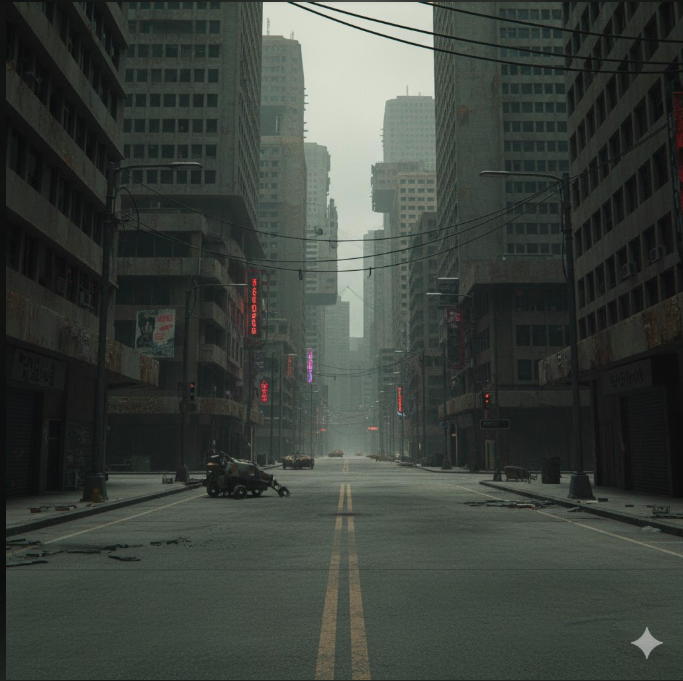
The streets were completely silent, as if no one was alive there. Mead’s moving shadow was the only thing moving in the street, like a hawk’s shadow passing over an empty piece of land. If he stood still and closed his eyes, he felt as if he were standing in the cold Arizona desert. The houses around him felt meaningless. The road seemed like a dry riverbed.
He checked the time, it was half past eight, and guessed the people inside must be busy with television: a murder mystery, a quiz show, a play, or a comedy. Once, he heard faint laughter from a house and paused, but when nothing more happened, he walked on. Going ahead, he stumbled over a broken part of the sidewalk. It had been ten years since he started this nightly habit, and he had never met another person out walking, not even one in all those ten years.
He reached a large cloverleaf-shaped intersection. In the daytime, it would be full of traffic—cars moving in lines like insects rushing somewhere, their exhaust rising like incense. But at night, the roads were empty again, just like dry riverbeds under the moon.
He finally turned back toward home. When he was only a block away, a police car stopped him. Its rooftop lights flashed, and he stood entranced, as if someone had cast a spell on him. Just like a moth that is attracted towards light, in the same way went toward it.
A metallic, robotic, cold computerized voice spoke from inside. “Stand still. Stay where you are! Don’t move”. And also warned that he would be shot if he did not obey. The city had about three million people, yet only one police car was needed because crime had dropped very low.
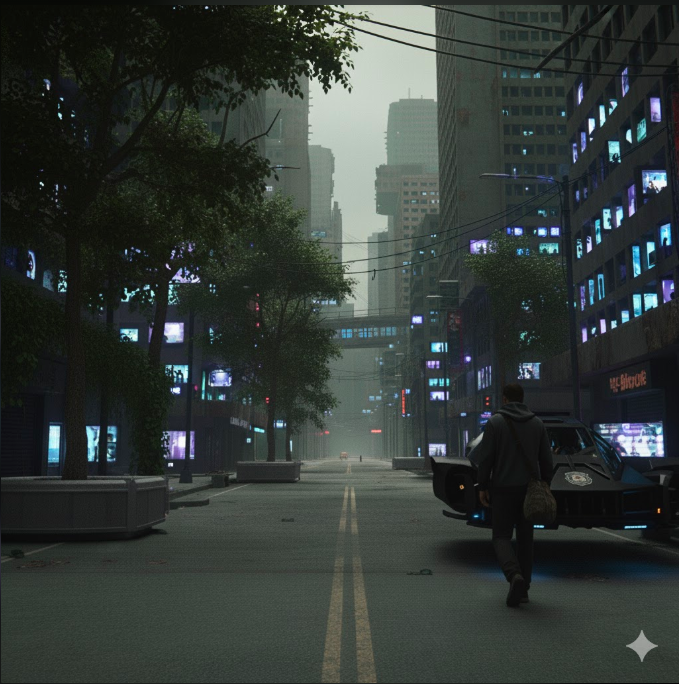
The voice asked his name. He couldnt se inside the car because the light was in his eyes. So he answered Leonard Mead. It asked his occupation. He answered that he was a kind of writer. The metallic voice reacted as if it were thinking to itself and declared that this was not a real profession. The bright beam from the police car shone on him like a museum spotlight on a pinned specimen.
Mead explained that he had not written for years. Books and magazines are no longer sold because everyone watches television. People sat in front of screens like ghosts. It is written- the gray or multicolored lights touching their faces, but never really touching them. It means that light from the television, it was falling on their faces, but still the programs did not truly enter their minds because they were not really paying attention. They weren’t watching it mindfully.
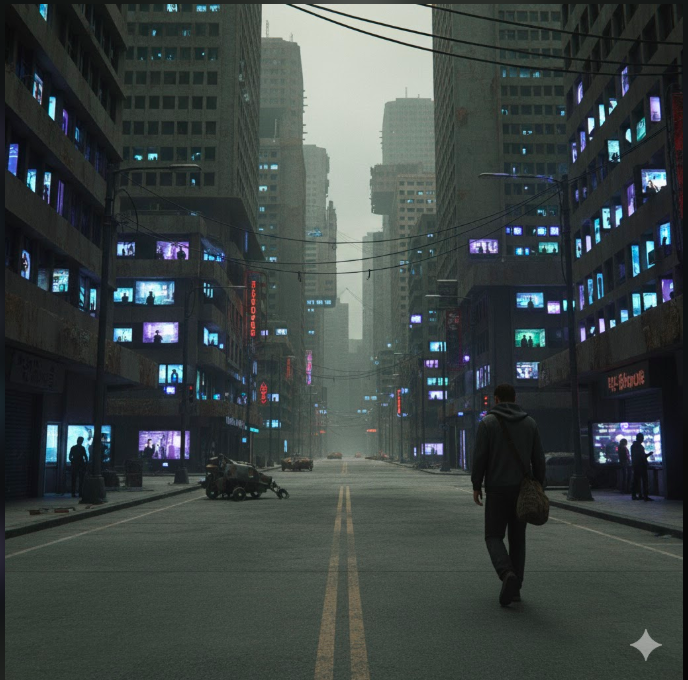
So the voice repeated “No profession” and asked, “What are you doing out”? Mead answered that he was simply walking, and then he felt the cold on his face as he said it. The voice said-“Walking, just walking, walking?” It seemed to find this strange and asked, “Walking where? For what?” Mead said he wanted fresh air and wanted to look around. Then the phonographic voice asked his address, and he told it: Eleven South Saint James Street.
The voice then pointed out that he already had air inside his house because he had an air conditioner. Mead said yes. Then it asked if he had a viewing screen at home. Mead said no. The voice made a sharp cracking sound, as if it took his answer like an accusation and said- NO?? It seemed to suggest that if he wanted fresh air, the air conditioner could provide it, and if he wanted to “look around,” he could do that through a viewing screen—without leaving home. To the machine, his reasons for being outside, it just did not make sense.
The voice asked next if he was married. Mead said no. The car’s light blinked. The moon was high up in the sky, among the stars, and the houses around it were dark and silent. Mead added that nobody wanted to marry him. The voice ordered- Don’t speak unless you are spoken to.
Mead went quiet. The voice asked again, “Just walking, Mr. Mead?”. He confirmed, yes. It said he had not given a convincing reason. Mead repeated that he wanted air, to look around, and to walk. The voice asked if he had done this before. Mead said he had been doing it every night for years. The voice said, “Well, Mr. Mead,” and Mead asked if the questioning was finished. It replied yes, it’s over.
Then Mead heard something like a deep breath, followed by a popping sound. The back door of the police car opened, and the voice ordered him to get in. Mead protested because he had done nothing wrong. But he was forced to obey. He moved unsteadily, almost like a drunk man, and walked around the front of the car. He tried to look inside to see who was there, but no one was inside. No one in the car at all!!
The voice ordered him to sit in the back. Mead held the door and looked inside. The back was a small metal cell, like a jail compartment. It smelled of steel and antiseptic, and everything inside felt hard and cold. Too clean and too metallic. The voice said- Now, if you had a wife to give you an alibi. But. He meant that if he had a wife, he could have given an excuse to avoid being taken away.
Mead asked where they were taking him. The car paused. There was a soft whirring and a click, like information being recorded. The voice said he was being taken to a psychiatric centre. Psychiatric Center for Research on Regressive Tendencies. Because, according to the metallic voice, his behaviour did not match his age, and it was called regressive, like the behaviour of a child.
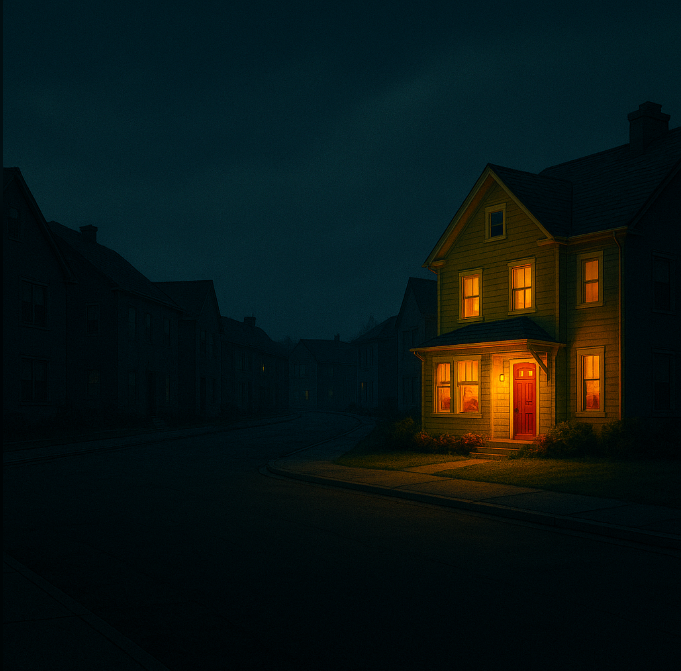
The door shut quietly, and it drove through the dark streets with its light flashing. It passed many houses, all dark and still. Then it passed one brightly lit house, glowing yellow from every window, warm in the cool darkness. Mead said- That’s my house. But no one answered him. The car continued into the empty streets, which again looked like dry riverbeds under the cold November night. Nothing moved. Nothing made a sound.
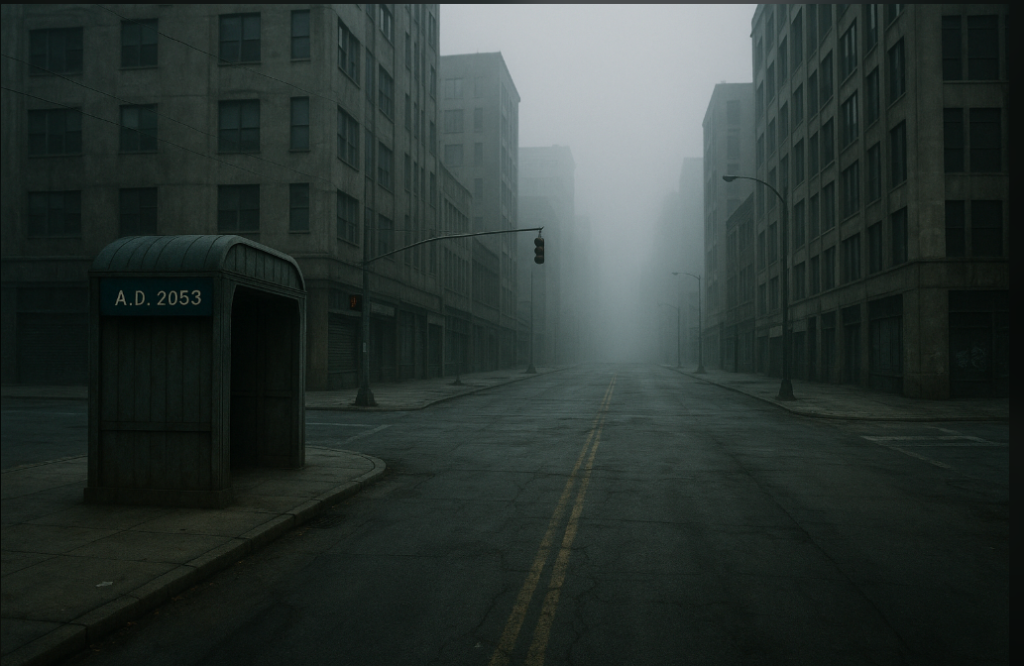
So through this story, the writer showed a future where people stayed inside, glued to TV, stuck to the screens, and stopped living real life.
Because everyone behaved the same, a man like Leonard Mead—who simply liked walking—seemed “strange” and suspicious.
The empty streets and silent houses showed how technology made society lonely and disconnected.
The story warned that too much screen time could destroy freedom, imagination, and human connection.
Question Suggestions for Boards Class 10
1. Very Short Answer Questions (1–2 marks)
- Who was Leonard Mead?
- At what time did Leonard Mead usually go for his walks?
- Why did Mead prefer wearing sports shoes?
- How long had Mead been going for night walks?
- What was unusual about the city streets at night?
- How many police cars were there in the city?
- What profession did Mead claim to have?
- Why did the police voice say writing was not a profession?
- What was the “viewing screen”?
- Where was Mead finally taken?
2. Short Answer Questions
- Describe Leonard Mead’s habit of walking.
- Why did the houses appear like graveyards to Mead?
- What role did television play in people’s lives in the story?
- Why was Mead considered suspicious by the police?
- How does the police car behave like a machine rather than a human?
- Explain why the streets were empty at night.
- What reasons did Mead give for being outside?
- Why was Mead’s profession not accepted by the police?
- How does Bradbury show that society had become lifeless?
- Describe the atmosphere of the city at night.
3. Long Answer Questions
Character-Based Questions
- Describe Leonard Mead as a character. How does he differ from the rest of society?
- Why can Leonard Mead be called a nonconformist?
- How does Leonard Mead represent individuality and free thinking?
Theme-Based Questions
- Discuss the theme of technology vs humanity in The Pedestrian.
- How does Bradbury show the dehumanizing effects of technology?
- Explain the theme of conformity versus individuality.
- How does the story highlight isolation and loneliness?
- Discuss how The Pedestrian is a warning about the future.
Plot & Incident-Based Questions
- Narrate the incident in which Leonard Mead was stopped by the police car.
- Describe Mead’s interaction with the robotic police car.
- Why was Mead taken to the psychiatric centre? Do you agree with the decision?
4. Literary Device & Style Questions
- Explain the use of imagery in describing the empty streets.
- How does Bradbury use metaphors like “graveyards” and “dry river beds”?
- Discuss the significance of the robotic police car as a symbol.
- Comment on Bradbury’s narrative style and tone.
- How does Bradbury create a sense of fear and suspense?
5. Symbolism-Based Questions (Very Important for Boards)
- What does Leonard Mead’s walking symbolize?
- What does the empty city symbolize?
- What does television symbolize in the story?
- What does the police car represent?
- Explain the symbolic meaning of darkness and silence in the story.
6. Value-Based / Interpretative Questions
- Do you think Leonard Mead was truly abnormal? Give reasons.
- Is the society shown in The Pedestrian truly advanced? Why or why not?
- What message does Bradbury convey through the story?
- How is The Pedestrian relevant in today’s world?
- What warning does the story give modern society?
8. Comparison / Opinion Questions
- Compare Leonard Mead with the rest of society.
- How would society react to someone like Leonard Mead today?
- Do you think technology has improved or harmed human relationships? Refer to the story.
9. One-Line Theme / Message Questions
- What kind of future does Bradbury warn us about?
- State the central theme of The Pedestrian.
- What is the message of the story?