 by
by Short Summary of the Poem
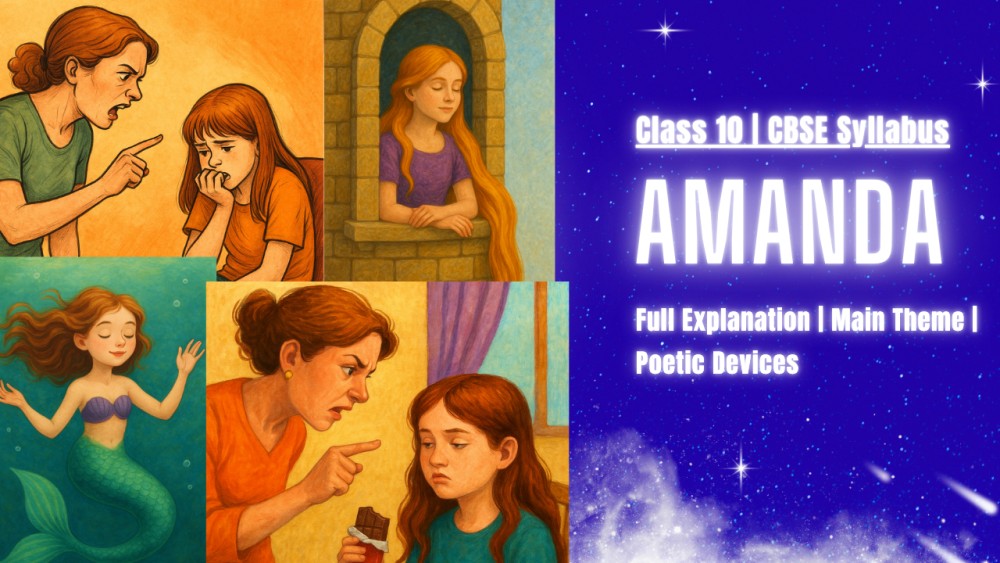
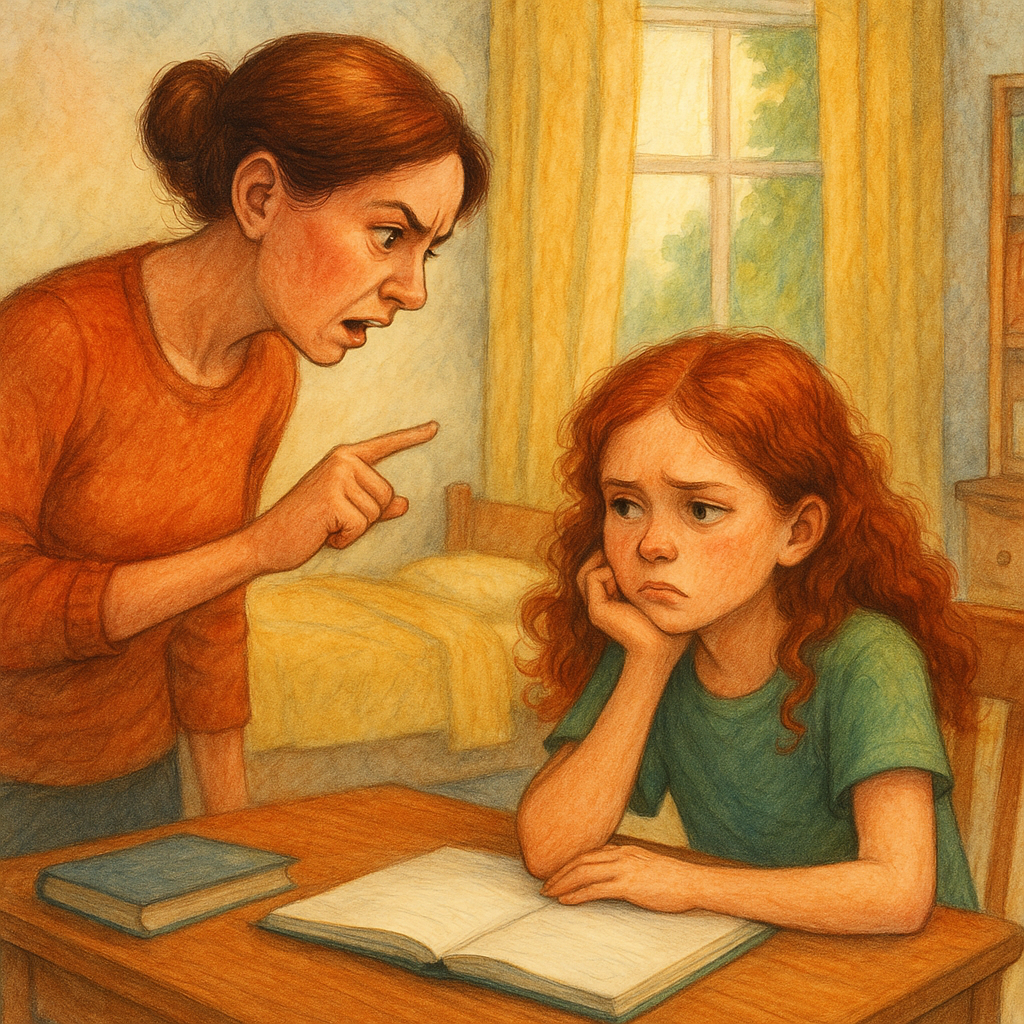
“Amanda!” is a humorous and thought-provoking poem written by Robin Klein. It feels like a conversation where Amanda’s mother keeps giving her constant instructions — don’t bite your nails, do your homework, clean your room.
In every stanza, Amanda drifts into her daydreams — sometimes imagining herself as a mermaid, sometimes as an orphan, and sometimes as Rapunzel. These dreams symbolize her desire for freedom, peace, and independence.
The poem highlights a universal theme — the conflict between a child’s individuality and a parent’s over-discipline. The rhyme scheme is aaba ccc, and the repeated use of “Amanda!” serves as a literary device called repetition.
Main Theme of the Poem
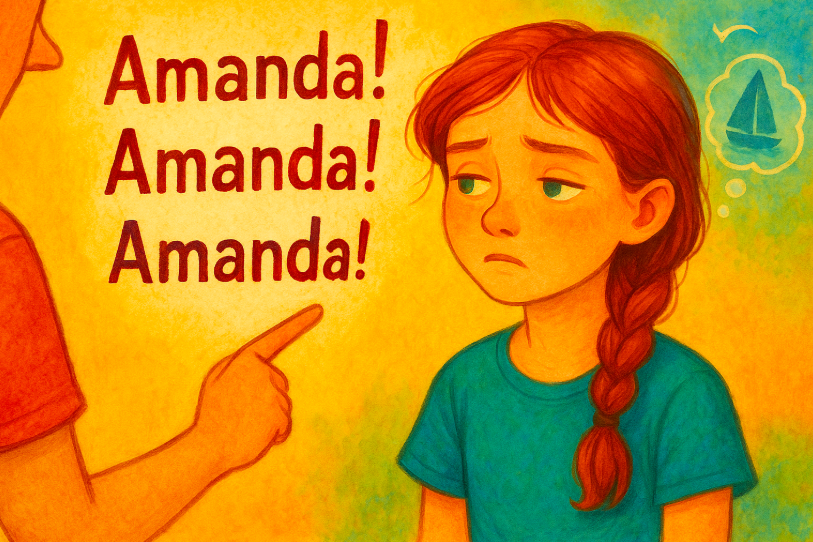
The main theme of Robin Klein’s poem “Amanda” is childhood innocence and the challenges of growing up. The poem tells the story of a young girl, Amanda, who feels trapped between her mother’s expectations and her own wishes. Her mother wants her to be responsible, while Amanda just wants to enjoy her childhood and live freely. The poem beautifully highlights how difficult it becomes to hold on to the freedom and joy of childhood when responsibilities and adult expectations start to take over.
Poetic Devices used in the Poem
1. Anaphora: The poetic device in which the words are repeated in the beginning of the lines. For example-
- Don’t bite your nails, Amanda!
Don’t hunch your shoulders, Amanda! - Did you finish your homework, Amanda?
Did you tidy your room, Amanda?
2. Assonance: The poetic device in which the vowel sound is repeated. For example in the lines-
- don’t hunch your shoulders, “o” sound repeat hui hai
- I thought I told you to clean your shoes, “o” sound repeat hoti hai
- Will you please look at me when I’m speaking to you, “o” and “e” sound.
3. Metaphor:The literary device in which comparison is made without using like or as. For example, in the second stanza, silence has been stated as Golden. And freedom is stated as expensive.
4. Alliteration: The poetic device in which the sounds are repeated in closely placed words. For example,
- ‘Stop sulking‘. Here ‘s’ sound is repeated.
- ‘Stop that slouching and sit up straight’ – ‘s’ sound is being repeated at the start of closely placed words.
5. Allusion: The literary device in which a reference is made to a person, place, event, or something from history, literature, or culture in a poem is called an allusion.
For example, the reference to the “mermaid” in the first stanza is an allusion to a well-known imaginary creature. Later, the mention of “Rapunzel” in the third stanza refers to a famous fairy-tale character.
Poem
Don’t bite your nails, Amanda!
Don’t hunch your shoulders, Amanda!
Stop that slouching and sit up straight,
Amanda!
(There is a languid, emerald sea,
where the sole inhabitant is me—
a mermaid, drifting blissfully.)
Explanation
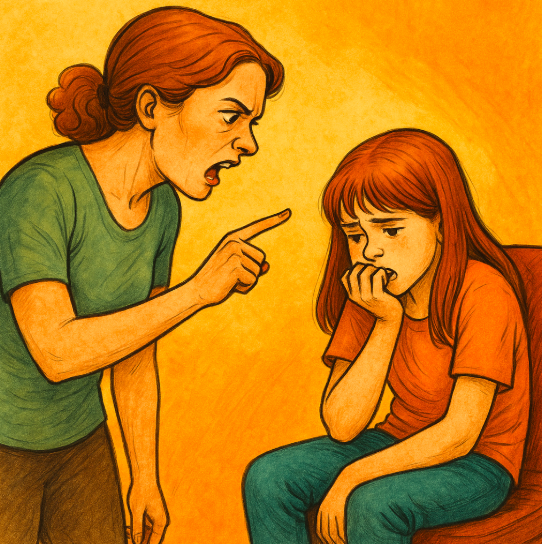
The poem begins with Amanda’s mother giving her a series of continuous instructions — don’t bite your nails, keep your shoulders straight, don’t slouch. This shows an authoritative tone. The poet describes Amanda as a girl whose mother constantly points out her mistakes and keeps scolding her again and again.
To escape from this constant nagging, Amanda drifts into her imagination. She imagines herself as a mermaid, alone, relaxed, and free in an emerald-green sea. The word “languid” means relaxed, and “drifting blissfully” means floating happily with the water.
You’ll notice that in every stanza, the lines written in brackets represent Amanda’s daydreams — they symbolize her desire for freedom and peace.

Poem
Did you finish your homework, Amanda?
Did you tidy your room, Amanda?
I thought I told you to clean your shoes,
Amanda!
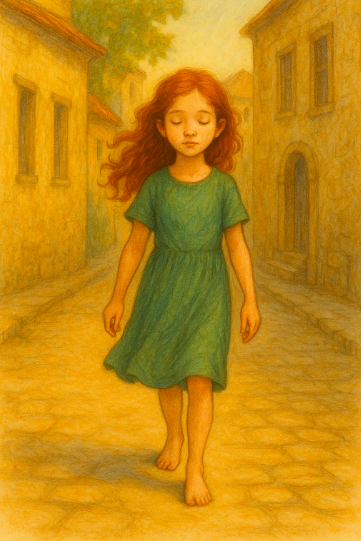
(I am an orphan, roaming the street.
I pattern soft dust with my hushed, bare feet.
The silence is golden, the freedom is sweet.)
Explanation
Amanda’s mother keeps giving her household instructions again and again — Did you finish your homework? Did you clean your room? Did you polish your shoes? This constant nagging irritates Amanda.
But Amanda isn’t really listening. In her imagination, she sees herself as an orphan — a free girl walking on the streets without any worries. She doesn’t have to think about homework, cleaning her room, or polishing her shoes. She quietly draws patterns in the dust with her bare feet, enjoying the silence.
Here we can see that Amanda and her mother think very differently. Her mother wants everything neat and tidy, while Amanda loves the feeling of freedom — walking barefoot and playing in the dust. Tired of the constant instructions, Amanda says “Silence is golden,” meaning peace is extremely valuable to her. Then she adds “Freedom is sweet,” showing that she never truly feels free when she’s with her mother.
It’s like when someone keeps telling you to finish your homework, and you start daydreaming — “I wish I were working somewhere instead, then no one would tell me to study!” That’s exactly how Amanda feels.
Poem
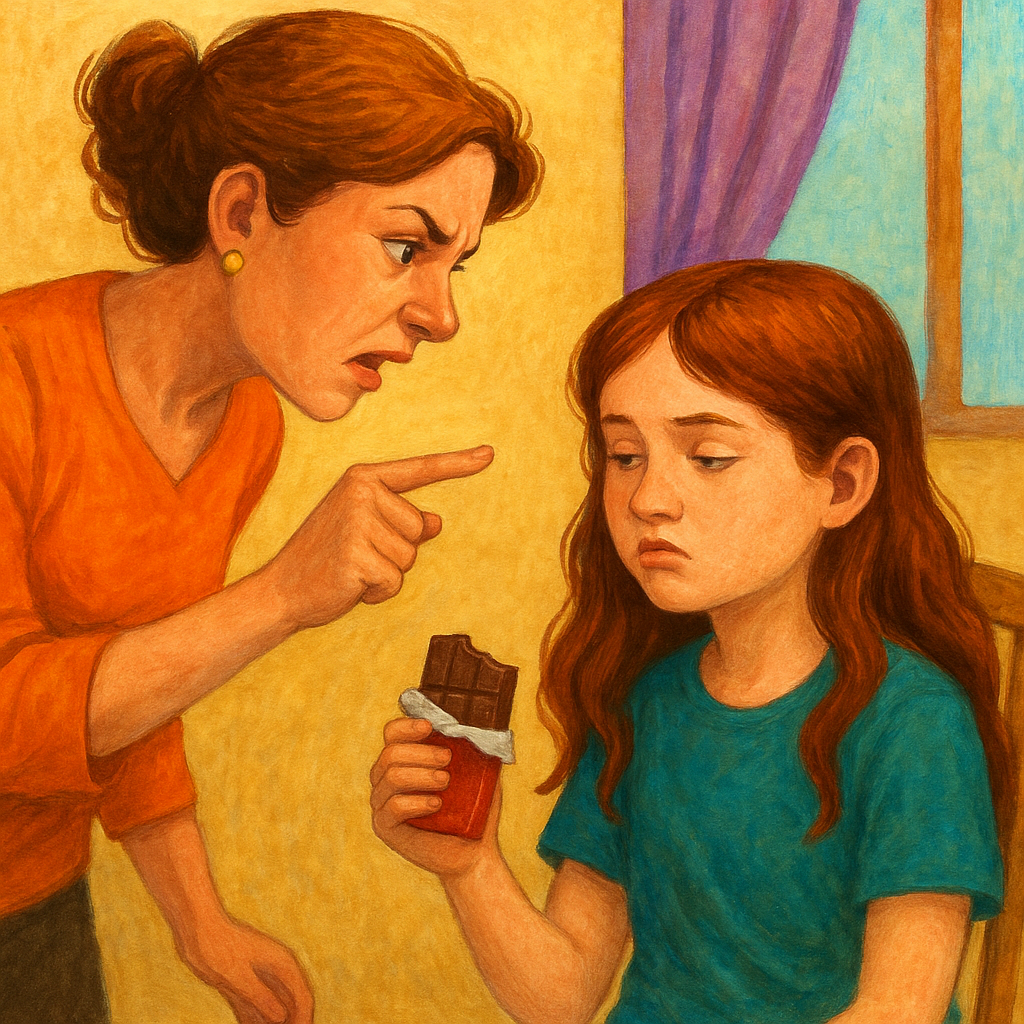
Don’t eat that chocolate, Amanda!
Remember your acne, Amanda!
Will you please look at me when I’m speaking to you,
Amanda!
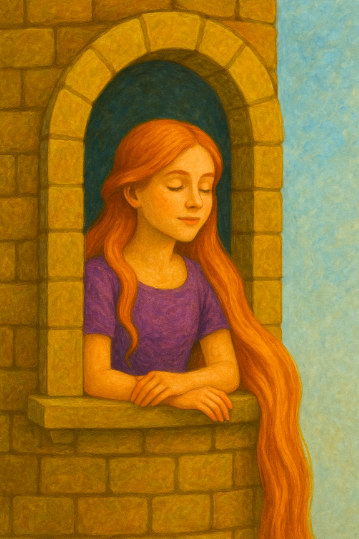
(I am Rapunzel; I have not a care;
life in a tower is tranquil and rare;
I’ll certainly never let down my bright hair!)
Explanation
Amanda’s mother scolds her again — Don’t eat that chocolate, you’ll get pimples! Then she says, Look at me when I’m speaking to you! This shows how Amanda’s mother’s constant scolding takes away her sense of freedom.
At this point, Amanda imagines herself as Rapunzel, the fairy-tale character who was locked in a tower by a witch. The witch used to climb up the tower with the help of Rapunzel’s long hair, which she would let down from the window. Amanda wishes to be like Rapunzel because she feels that living alone in a tower would be more peaceful and special than living with her mother. She imagines herself free and calm in that isolation.
But unlike Rapunzel, Amanda decides she would never let her hair down for anyone — meaning she wouldn’t let anyone enter her peaceful world. This shows her strong desire to stay independent and undisturbed.
Poem
Stop that sulking at once, Amanda!
You’re always so moody, Amanda!
Anyone would think that I nagged at you,
Amanda!
Explanation
Amanda’s mother now tells her to stop sulking — meaning stop pouting or looking upset. She thinks Amanda is always moody. The mother also worries that if people see Amanda’s face, they’ll think she keeps nagging her daughter all the time.
Here, there’s a clear irony — the mother keeps scolding Amanda, yet when Amanda reacts, the mother blames her for it. In other words, Amanda is being scolded and, at the same time, not even allowed to express her feelings.
It’s a typical situation — like when a mother scolds you, and if you start crying, she says, “Stop crying, or you’ll get another one!” That’s exactly what Amanda is going through — she’s stuck between obedience and self-expression.