 by
by Drama | Class 10 | ICSE Syllabus | Julius Caesar | Short Explanation
Context: What happened just before
In Act 3, Scene 2, after the death of Julius Caesar, Brutus and Cassius addressed the Roman crowd. Brutus spoke first. He explained his motives and claimed that he loved Rome more than Caesar. And his justification clearly impressesd the people, as they started cheering up for him and claimed that “Let him be Caesar”.
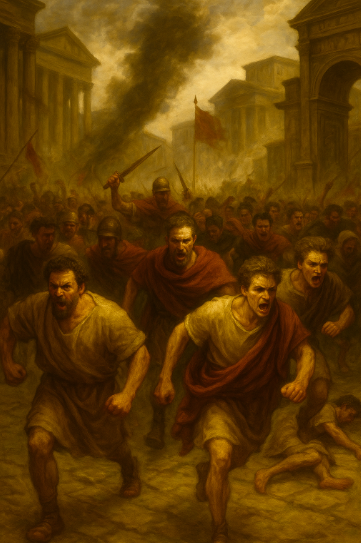
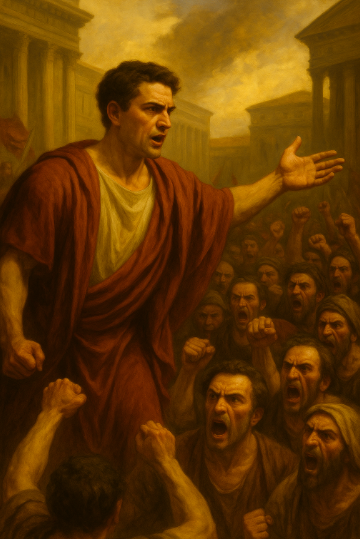
Though this little victory on the part of the conspirators didn’t last long. Because it was Mark Antony’s turn to show up on the stage. He gave his speech and very cleverly he turned the crowd against the conspirators. He showed Caesar’s will and showed his wounds naming each wound after each conspirator. At this the crowd was enraged, heading toward outrage and revolt.
Summary of Scene 3
- A man named Cinna the Poet is walking toward Caesar’s funeral. He reflects on an ominous dream.
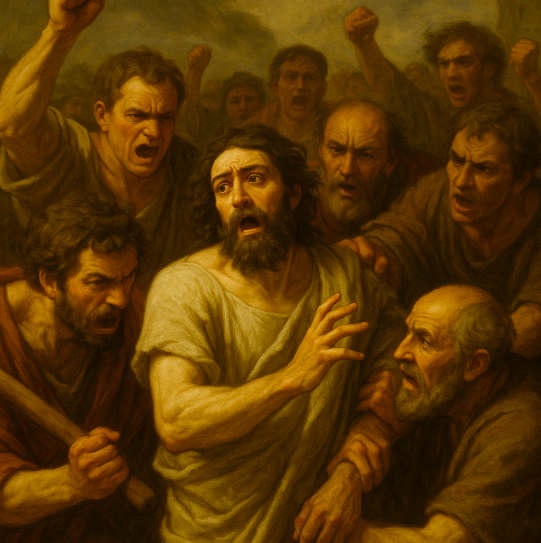
- He encounters a mob of angry citizens who interrogate him: his name, where he’s going, if he is married.
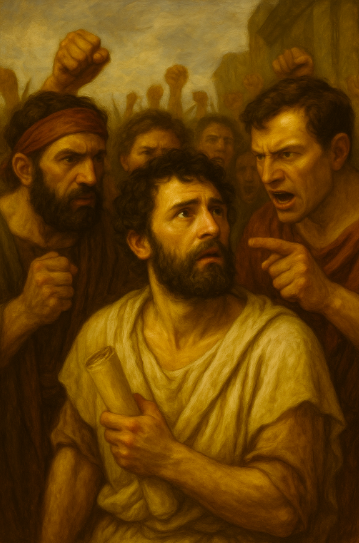
- When he says his name is “Cinna,” the mob mistakes him for “Cinna the conspirator”. He was one of Caesar’s murderers. They refuse to listen to his protest that he is “Cinna the Poet.”
- Despite his protests, the crowd decides to punish him anyway — one citizen even shouts, “Tear him for his bad verses!” . This shows how irrational the mob has become.
- Then the scene ends with the mob heading off to burn the houses of the conspirators, showing the breakdown of order in Rome.
Why this scene matters:
- It shows how far chaos has spread in Rome: the mob no longer acts under reason, just rage. Badle ki aag me woh sab bhool chuke hain.
- Even though Cinna the Poet is innocent, his name is enough to convict him.
- It emphasises a thematic shift: the conspirators’ act was supposed to bring freedom and order, but instead there is chaos and disorder.
- This scene acts as a short but powerful break between the conspirators’ speeches and the rising civil war that follows.