
 by
by Drama | Class 10 | ICSE Syllabus | Julius Caesar | Short Explanation
Context: What Happened Before
In Act 4, Scene 2, we move to Brutus and Cassius’s military camp. Tension rises between the two friends and fellow conspirators as they prepare to fight Antony and Octavius. Cassius feels disrespected, and Brutus accuses him of corruption. Their friendship is shaken — and that conflict continues right into Scene 3.
Summary of Act 4, Scene 3
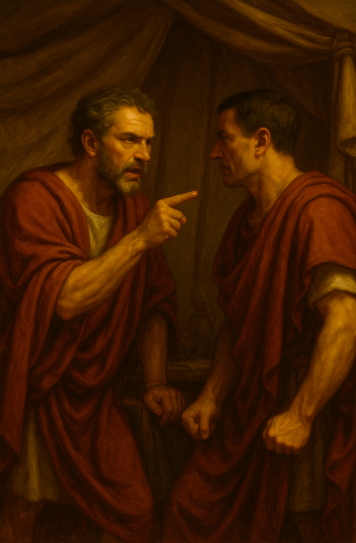
The entire scene takes place inside Brutus’s tent at Sardis, where Brutus and Cassius finally let their anger out in a private, heated argument.
1. The Argument
- Cassius accuses Brutus of doing wrong to him by blaming one of his officers for taking bribes.
- Brutus replies that Cassius himself is greedy and says that they killed Caesar for justice, not to become corrupt.
- The fight grows intense; Cassius feels deeply hurt and claims that Brutus no longer loves or trusts him.
- At one point, Cassius even offers his dagger, telling Brutus to kill him if he truly believes he’s dishonest.
- Moved, Brutus calms down. They reconcile and forgive each other.
This shows both their pride and their loyalty — they fight like brothers but also make peace like brothers.
2. Personal Tragedy
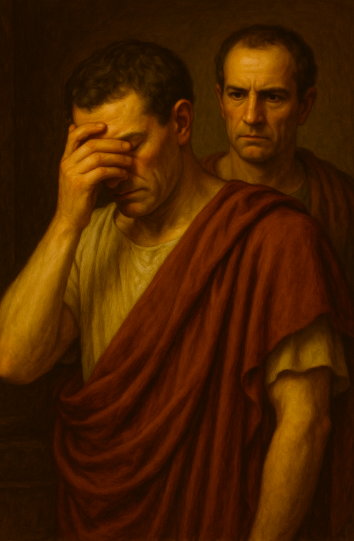
- After the argument, Brutus confesses that his wife, Portia, has committed suicide by swallowing hot coals.
- Cassius is shocked, but Brutus suppresses his grief — showing his cold, disciplined nature as a leader.
3. Strategy and Foreshadowing
- Then messengers arrive, reporting that Antony and Octavius have executed several senators in Rome.
- Brutus and Cassius debate battle strategy — Cassius wants to wait for the enemy to approach, but Brutus insists they should march to Philippi and meet them first.
- Brutus wins the argument.
- And as night falls, their bond is restored, but the tension of fate hangs over them.
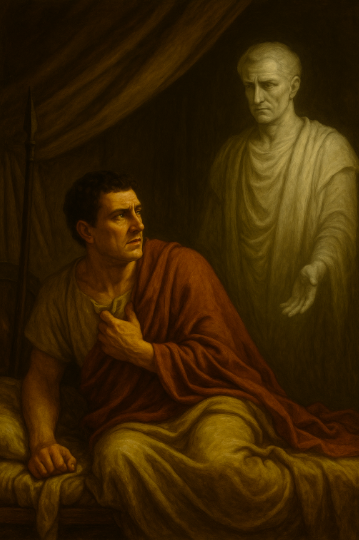
4. The Ghost
- After Cassius leaves, Brutus tries to sleep.
- Suddenly, the ghost of Julius Caesar appears and tells him: “Thou shalt see me at Philippi.”
- Brutus is shaken but he is brave. The ghost disappears, and he prepares to march toward his destiny.
Why This Scene Matters
- It’s the emotional heart of the play: friendship, guilt, and fate collide.
- We see Brutus’s inner conflict — his stoic control, his patient control versus his buried pain.
- The appearance of Caesar’s ghost symbolizes guilt and foreshadowing. It is also a reminder that Caesar’s death still haunts Rome.
- The scene ends by setting up the final act: the Battle of Philippi, where everything that began with Caesar’s murder will come full circle.