
 by
by Overview of all Scenes | Questions that can be asked in Exam
What Happened Before Act 4
After Banquo’s murder and the escape of Fleance in Act 3, Macbeth grows more insecure. At the banquet, Banquo’s ghost appears and terrifies Macbeth. As a result of this, others are now suspicious about his mental state. Macbeth realizes he must take more control over his fate. In order to know what’s next, he decides to visit the witches again. His ambition and fear now drive him more than reason or morality.
Summary: Act 4, Scene 1
The scene opens in a dark and eerie cave. The three witches stand around a bubbling cauldron, throwing strange and horrible ingredients into it. Thunder cracks, and the atmosphere feels dangerous and definitely supernatural. They chant their famous spell, preparing a charm before Macbeth arrives.
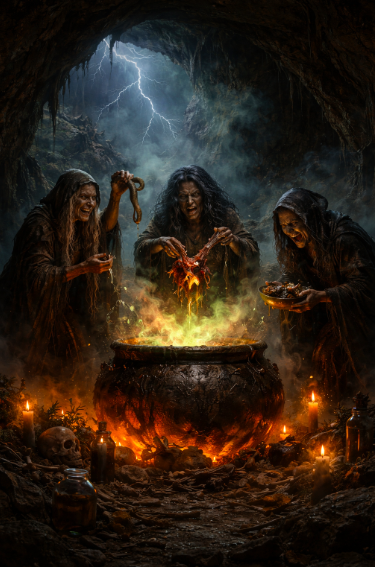
Suddenly, Macbeth enters. And now he speaks with authority, which is far different from the hesitant soldier we saw earlier. He demands answers from the witches, because he is determined to know his future. Witches, on the other hand, instead of answering directly,they summon three apparitions– ghosts, spirits,shadow!
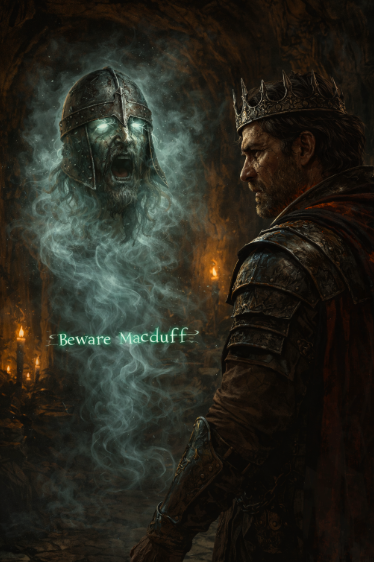
- The First apparition is an armed head. It warns Macbeth to beware of Macduff. Macbeth feels confirmed in his suspicion and decides that Macduff is now a target.
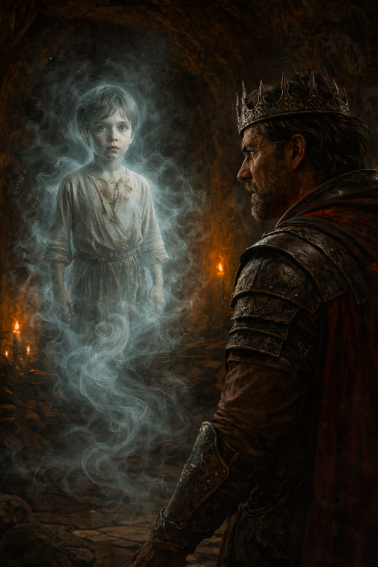
- The Second apparition appears as a bloody child. It tells Macbeth that No man born of a woman can harm him. On seeing this, Macbeth feels powerful and almost invincible.
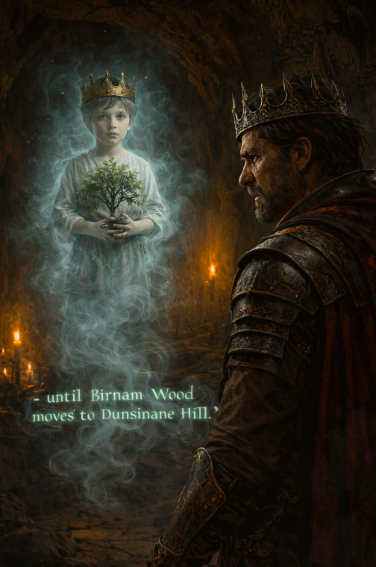
- The Third apparition is a crowned child holding a tree. It says Macbeth will never be defeated Until Birnam Wood moves to Dunsinane Hill. Macbeth thinks this is impossible, so he believes his rule is secure.
In this context, there was a question asked in Boards 2025, that- In Act IV Scene i of the play, Macbeth, Macbeth gets angry at the witches when they show him the vision of the line of kings because ________________
Explanation- It shows that Banquo’s children will become kings, putting Macbeth’s power and future rule in danger.
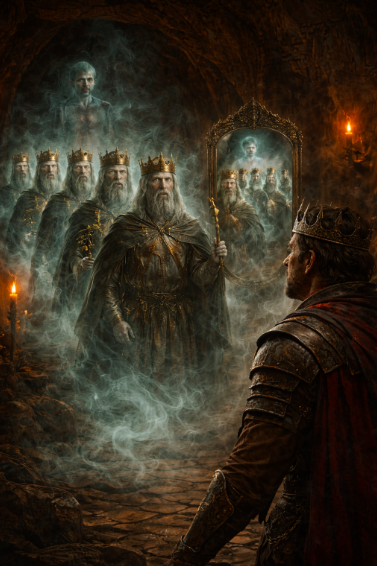
But Macbeth wants more information. He asks if Banquo’s descendants will ever rule Scotland. In response to this question, a procession of Eight kings appears, and the last one is holding a mirror — all resembling Banquo. Banquo’s ghost stands behind them, smiling. Macbeth realizes the prophecy still stands: Banquo’s line will rule, not Macbeth’s. On seeing this, he is furious and shaken.
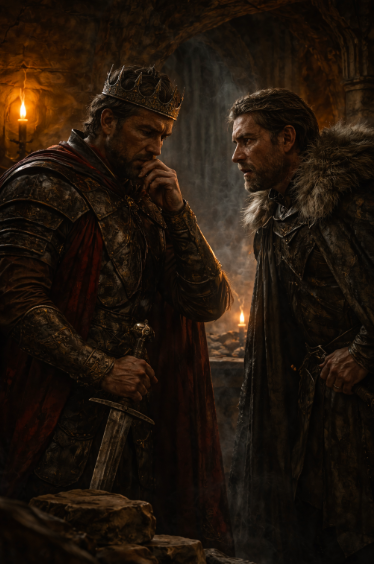
After Macbeth leaves, the witches perform a final charm and vanish. Immediately, Lennox arrives with news that Macduff has fled to England. Macbeth decides to act without hesitation. Instead of targeting only Macduff, he makes a more brutal decision — he will kill Macduff’s family. This moment shows Macbeth has crossed from ambitious to ruthless and tyrannical.
The scene is extremely important as it pushes Macbeth further into darkness. He becomes overconfident due to the prophecies, but also terrified of Banquo’s legacy and Macduff. The witches give him answers, yet twist fate in such a way that it leads him closer to destruction. His choice to murder an innocent family marks the point where his humanity is almost completely gone.
Now from this act, you can be asked long-answer question- “The prophecies in Act 4 give Macbeth confidence but also lead to his destruction.” Discuss.
Summary: Act 4, Scene 2
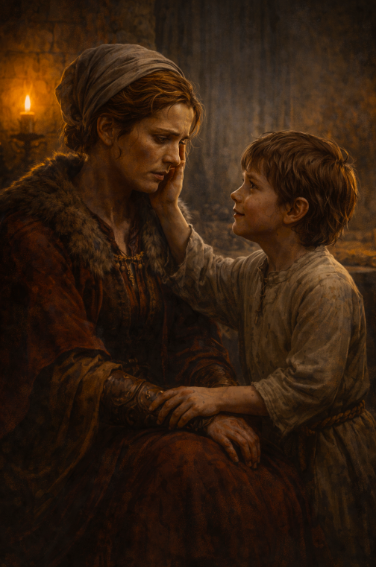
The scene moves to Macduff’s castle at Fife. Lady Macduff is upset and confused. She cannot understand why her husband has left without telling her. To her, it feels like abandonment. She questions his love, his wisdom, and even his courage. Her son tries to comfort her, speaking playfully and cleverly. Their conversation here creates a very sweet moment, and this makes the coming tragedy more painful.
In this context there was a 5 mark question asked in Boards 2025, that- How does Lady Macduff respond to her husband’s sudden departure in Act IV Scene ii? What does her response suggest about her nature?
Explanation– Now listen to its answer very carefully. It is 5 mark question. So your answer will have to be detailed, adding quotations from the play.
Lady Macduff reacts to Macduff’s sudden departure with shock and anger. She feels abandoned and believes that he has left his family unprotected. She questions his wisdom and love, saying, “He loves us not; he wants the natural touch” and compares him unfavourably to even a small bird that instinctively protects its young. Her words show her deep sense of betrayal and fear, as she feels helpless without her husband.
Her reaction also highlights her bold and outspoken nature, as she openly criticises Macduff without holding back. At the same time, her conversation with her son reveals her intelligence and emotional strength. She speaks to him with humour and affection, using playful yet meaningful words despite the danger surrounding them. Her final statement, “I have done no harm” reflects her innocence and moral purity. It emphasises her tragic position as a victim of Macbeth’s cruelty. Overall, Lady Macduff appears as a strong, loving, and honest woman who is deeply hurt by her husband’s absence but facing her fate with courage and dignity.
A messenger suddenly enters and warns Lady Macduff to take her children and run. He cannot explain the danger, but he knows it is urgent. Lady Macduff hesitates, unsure where to go. A few moments later, Macbeth’s hired murderers burst into the house.
The killers ask where Macduff is. Lady Macduff bravely defends her husband, even though she knows they have come for violence. The murderers turn to her son. They call him a traitor’s child and stab him. The boy dies, asking his mother to run. Lady Macduff screams and tries to escape, but she is chased off stage. And we all know that she will be killed as well.

This scene is very heartbreaking — it shows how far Macbeth has fallen. He once killed only for power, but now he kills out of fear and cruelty. The murder of an innocent mother and child prepares us for Macduff’s future revenge. Macbeth thinks killing Macduff’s family will weaken him, but in reality, it creates the passion and fury that will later destroy Macbeth himself.
There was an MCQ asked from this scene in Boards, 2025- How does Ross describe Macduff to Lady Macduff in Act IV Scene ii of the play, Macbeth?
(a) Noble, wise and judicious (b) Dishonest, cowardly and foolish (c) Ambitious, cruel and secretive (d) Loyal, brave and trustworthy
So the correct option is(a) Noble, wise and judicious
Explanation:
In Act IV, Scene ii, Ross tells Lady Macduff that her husband is a good and sensible man. He describes Macduff as noble, wise, and judicious, which means that Macduff is honourable, thinks carefully, and makes the right decisions.
Summary: Act 4, Scene 3
The scene takes place in England. Malcolm and Macduff meet, but Malcolm does not trust Macduff immediately. He fears Macduff might be working for Macbeth, trying to trick him into returning to Scotland so Macbeth can kill him. Malcolm tests Macduff by pretending he would be a worse king than Macbeth — greedy, lustful, and violent.
In this context, there was 1 mark question asked, in boards 2025, that- In Act IV Scene iii of the play, Macbeth, Malcolm is suspicious of Macduff’s intentions because _______.
Explanation- He suspects that Macduff could be working for Macbeth, pretending to help him while secretly trying to trick and betray him.
Macduff is shocked. He argues that a ruler must be honorable, wise, and just. When Macduff finally loses hope and cries for Scotland, Malcolm realizes his sorrow is genuine. This proves Macduff loves his country more than personal power. Malcolm then reveals the truth — he is not actually like that; he only pretended to see Macduff’s loyalty. He agrees to unite with him against Macbeth.
At this moment, Ross arrives from Scotland with heartbreaking news. Friends waala Ross nahi. After hesitation and pain, he finally tells Macduff that Macbeth has brutally murdered his wife and children. On hearing this, Macduff is devastated. His grief turns into burning anger. He blames himself for not being there to protect them. At this moment, Malcolm encourages him to channel this pain to fight Macbeth.
Macduff swears revenge — not just as a political duty, but as a personal mission. The scene ends with Malcolm and Macduff preparing to return to Scotland with the English army. They seem to be determined to end Macbeth’s tyranny.
This scene is crucial because it marks the birth of Macbeth’s biggest threat. The murder meant to silence Macduff becomes the spark that will destroy Macbeth. Malcolm finds trust in Macduff, Scotland gains hope, and the stage is set for the final confrontation.
You can be asked long-answer question- Compare Lady Macbeth and Lady Macduff as presented in Act 4.
Question Suggestions
VERY SHORT ANSWER QUESTIONS (1–2 marks)
- Why does Macbeth visit the witches again in Act 4?
- Where does Act 4, Scene 1 take place?
- What are the witches doing when the scene opens?
- Name the three apparitions shown to Macbeth.
- What warning does the first apparition give?
- What assurance does the second apparition give Macbeth?
- What prophecy is made by the third apparition?
- Why does Macbeth feel secure after hearing the prophecies?
- Who appears behind the line of kings?
- How many kings are shown in the vision?
- What does the mirror carried by the last king suggest?
- Who brings news of Macduff to Macbeth?
- Where has Macduff gone?
- Why does Macbeth decide to kill Macduff’s family?
- Where does Act 4, Scene 2 take place?
- Who warns Lady Macduff of danger?
- What role does Lady Macduff’s son play in Scene 2?
- Where does Act 4, Scene 3 take place?
- Why does Malcolm test Macduff?
- Who brings news of Macduff’s family’s murder?
SHORT ANSWER QUESTIONS (3–4 marks)
- Explain why Macbeth is no longer satisfied with half-truths from the witches.
- How do the witches use equivocation in their prophecies?
- Why is the second apparition’s message misleading?
- How does the third apparition create a false sense of security in Macbeth?
- Why is the vision of Banquo’s descendants especially disturbing to Macbeth?
- How does Lennox’s news influence Macbeth’s next decision?
- Describe Lady Macduff’s feelings about her husband’s departure.
- How does Shakespeare use Lady Macduff’s son to increase pathos?
- Why does Malcolm doubt Macduff’s loyalty?
- How does Macduff react when he hears about the murder of his family?
- What advice does Malcolm give Macduff after the tragic news?
- How does Ross describe the condition of Scotland under Macbeth?
- Why is the murder of Macduff’s family unnecessary from a political point of view?
- Show how Macbeth’s actions in Act 4 differ from those in Act 1.
- How does Act 4 prepare the audience for Macbeth’s downfall?
REFERENCE-TO-CONTEXT (EXTRACT-BASED) QUESTIONS
(Any extract from Act 4 can be asked)
- With reference to the witches’ cauldron scene, explain how the atmosphere is created.
- Explain the context and significance of: “Beware Macduff.”
- Explain the meaning and irony of: “None of woman born shall harm Macbeth.”
- What does “Till Birnam Wood to Dunsinane Hill shall come” suggest?
- Explain the dramatic irony involved in the apparitions’ prophecies.
- With reference to the vision of the eight kings, explain Macbeth’s reaction.
- Explain Lady Macduff’s statement: “He loves us not.”
- How does the murder of Lady Macduff’s son increase the tragic impact of the scene?
- Explain Malcolm’s speech in which he pretends to be immoral.
- With reference to Macduff’s reaction, explain how grief turns into revenge.
CHARACTER-BASED QUESTIONS
- How does Act 4 show Macbeth as a tyrant rather than a hero?
- Discuss the role of the witches in Act 4.
- How is Lady Macduff presented as a contrast to Lady Macbeth?
- Examine Macduff as a patriot in Act 4.
- How does Malcolm emerge as a wise and cautious leader?
- How does Act 4 reveal Macbeth’s complete moral downfall?
- Discuss the significance of Banquo’s ghostly presence in the vision.
- Show how Shakespeare evokes sympathy for Macduff.
- How does Ross function as a messenger of truth and suffering?
- Comment on the role of children in Act 4.
THEME-BASED QUESTIONS
- How is the theme of appearance vs reality developed in Act 4?
- Discuss the role of fate vs free will in Act 4.
- How does Shakespeare show the destructive power of ambition in this act?
- Examine the theme of innocence vs cruelty in Act 4.
- How does the supernatural influence Macbeth’s decisions?
- Discuss the theme of tyranny and suffering in Scotland.
- How does Shakespeare use irony in the witches’ prophecies?
- Show how false confidence leads to Macbeth’s downfall.
- How is violence shown to breed more violence in Act 4?
- How does Act 4 deepen the tragic tone of the play?
LONG ANSWER / 10–15 MARK QUESTIONS
- “The prophecies in Act 4 give Macbeth confidence but also seal his fate.” Discuss.
- Act 4 is a turning point in Macbeth. Explain.
- How does Shakespeare use the witches to mislead Macbeth in Act 4?
- Compare Lady Macbeth and Lady Macduff as presented in Act 4.
- How does the murder of Macduff’s family contribute to Macbeth’s downfall?
- Discuss Macbeth’s transformation in Act 4.
- Show how Shakespeare prepares the audience for the final conflict in Act 4.
- How does Act 4 strengthen the tragic structure of the play?
- “Macbeth’s greatest enemy is his own false sense of security.” Explain with reference to Act 4.
- Examine the significance of Macduff in Act 4.