 by
by Short Summary of the Poem
The Ball Poem is a reflective and emotional poem in which John Berryman conveys a deep life lesson through a small incident.
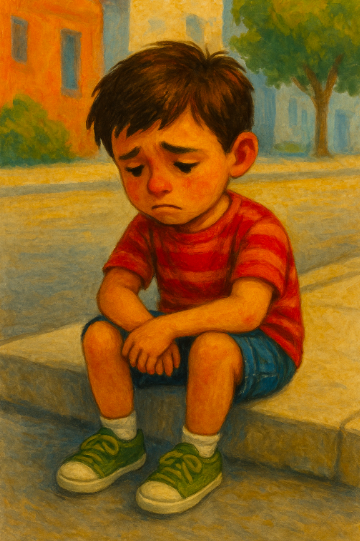
A young boy loses his ball, and through this loss, he realizes for the first time that things don’t always stay with us. The poem highlights the themes of loss and responsibility — showing how we must prepare ourselves to face tough situations in life.
The poem is written in free verse, meaning it has no rhyme scheme.
Main Theme of the Poem
The main themes of John Berryman’s “The Ball Poem” are childhood and grief. In the poem, the speaker recalls memories of his childhood — those carefree and innocent days when he used to play with his ball. However, as a person grows up, the innocence and happiness of childhood slowly fade away.
At the same time, the poem gives an important message: loss is an inevitable part of life — it cannot be stopped or avoided. What we can do is learn to accept that loss and move forward in life.

Poetic Devices used in the Poem
1. Anaphora: The poetoc device in which the words are repeated in two or more than two lines. For example, in the second and third line of the poem-
- What is the boy now, who has lost his ball,
What, what is he to do? I saw it go and - Merrily bouncing, down the street, and then
Merrily over — there it is in the water! - Balls, balls will be lost always, little boy.
2. Assonance: The poetic device in which vowel sounds are repeated. For example in the line-
- What is the boy now, who has lost his ball. In this line “o” sound is repeated.
- He is learning, well behind his desperate eyes. In this line “e” sound is repeated.
3. Imagery: The poetic devices in which the readers form a picture in their mind. For example in the line- merrily bouncing down the street.
Line-by-line explanation of the Poem
Poem
What is the boy now, who has lost his ball,
What, what is he to do? I saw it go
Merrily bouncing, down the street, and then
Merrily over — there it is in the water!
Explanation-
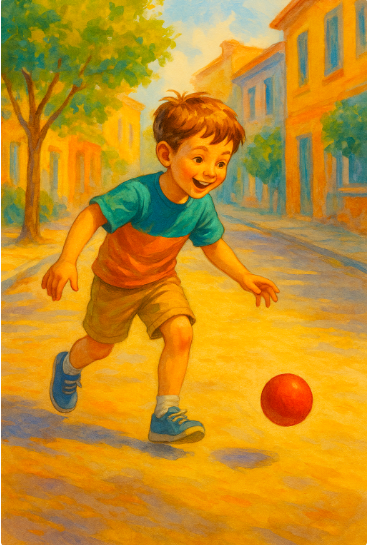
The poet observes a young boy whose ball has been lost. The ball bounces along the street and finally falls into the water.
The poet then wonders — what will the boy do now? To highlight the boy’s helplessness and grief, the poet repeats the line “What, what is he to do?” This shows the boy’s first experience of loss — the first time he feels the pain of losing something that belonged to him.
Poem
No use to say ‘O there are other balls’:
An ultimate shaking grief fixes the boy
As he stands rigid, trembling, staring down
All his young days into the harbour where
His ball went. I would not intrude on him;
A dime, another ball, is worthless. Now
He senses first responsibility
Explanation–
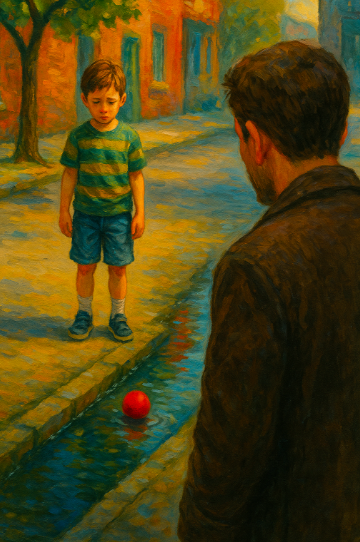
In these lines, the poet says that there’s no point in telling the boy, “Don’t worry, there are many other balls — you can play with another one.” Why? Because the boy is deeply sad after seeing his ball fall into the water. He stands there silently, just staring at the water — nervous, shaky, and heartbroken. It’s as if all his childhood memories have gone away with that ball. All those sweet moments connected to it — when he played with it — are now lost.
The poet also says that he doesn’t want to interrupt the boy. He wants the boy to understand the meaning of loss on his own. The poet doesn’t even want to say, “Here, take this money — go and buy another ball.” Because that new ball will never give the boy the same sense of belonging. It won’t feel like his ball; it won’t carry the same memories or emotions.
Finally, the poet says that this is the moment when the boy will learn his first lesson of responsibility — that we must take care of the things we love and learn to handle loss with maturity.
Poem
In a world of possessions. People will take
Balls, balls will be lost always, little boy.
And no one buys a ball back. Money is external.
He is learning, well behind his desperate eyes,
The epistemology of loss, how to stand up
Knowing what every man must one day know
And most know many days, how to stand up.
Explanation–
In this stanza, the poet says that the boy must learn that in this materialistic world, he will lose many things in life. The ball here is personified to represent all his belongings — whether material possessions or relationships. The poet suggests that the boy has to learn to live without these things because, at some point in life, everyone loses something they value deeply. And no one — not even money or another person — can bring those exact things back. As they say, money can’t buy everything. Even if you replace what’s lost, it will never hold the same emotional connection or sense of belonging.
The poet wants to convey that the boy is now learning how to cope with loss — to face the pain of losing something and still remain strong. The word epistemology means knowledge — so, the boy is gaining the true knowledge of life: that pain and loss are inevitable, but we must accept them and rise again.
It’s like when your phone’s data gets deleted — you can buy a new phone, but you can’t get back the old photos and chats. The boy is realizing this same truth about life.
For exam, just remember these points-
- Epistemology of loss = knowledge of life’s harsh truth
- Ball = symbol of possessions & childhood memories
- Boy’s grief = first experience of loss
- First responsibility = accepting and facing loss