 by
by Short Summary of the Poem
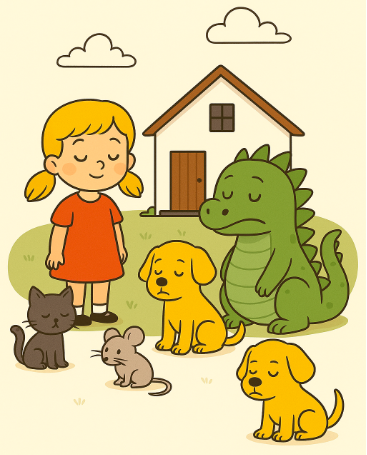
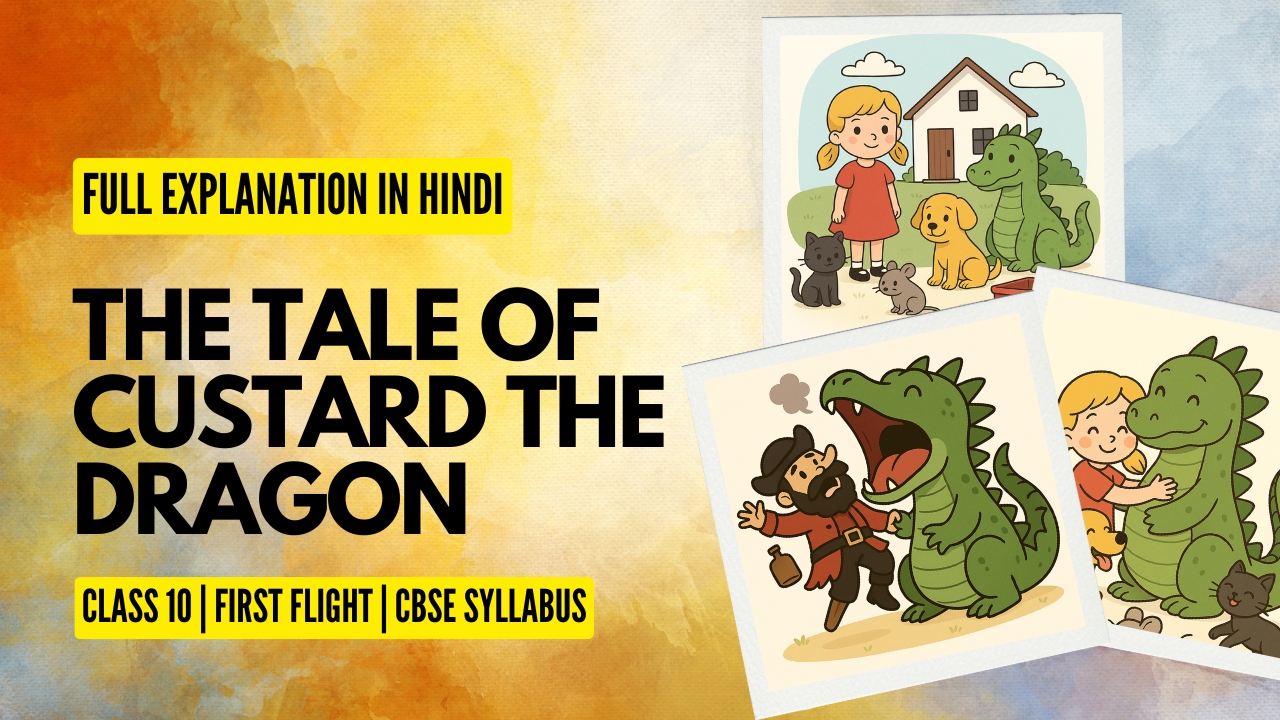
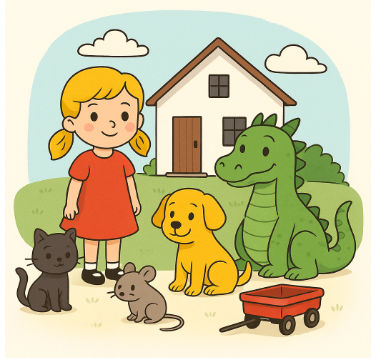
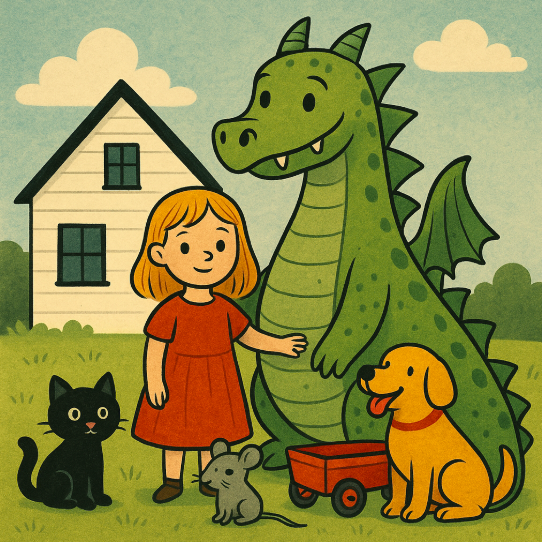
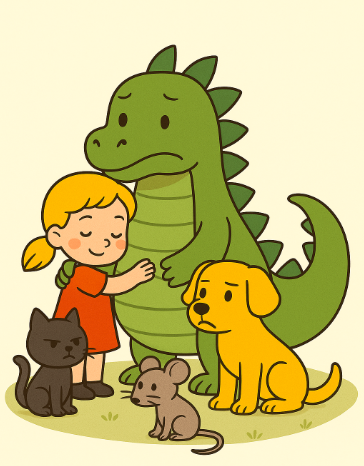
“The Tale of Custard the Dragon” is a humorous and entertaining poem written by Ogden Nash. It tells the story of a little girl named Belinda who lives in a small white house with her four pets — a black kitten named Ink, a grey mouse named Blink, a yellow dog named Mustard, and a real dragon named Custard.
Belinda and her pets always show off how brave they are. Ink and Blink claim they can hunt lions, Mustard acts like a fierce tiger, and Belinda herself feels as strong as a group of bears. But Custard, the dragon, is different — he is shy, gentle, and always asks for a safe cage because he is afraid of everything. Everyone teases and laughs at him for being a coward.
One day, their bravery is tested when a pirate breaks into the house. The pirate has pistols in both hands, a sword between his teeth, a wooden leg, and a scary black beard. All the so-called brave ones — Belinda, Ink, Blink, and Mustard — get frightened and run away for safety.
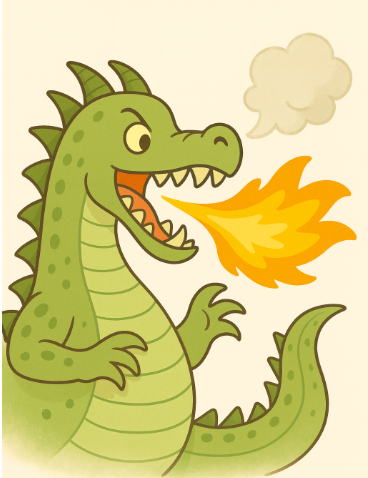
Surprisingly, Custard, the timid dragon, shows real courage. He jumps at the pirate, roars loudly, blows smoke like an engine, and finally gobbles up the pirate completely. Belinda hugs Custard, and everyone praises him for saving their lives.
However, soon after, they all start making excuses for their fear. Mustard says he was confused, and Ink and Blink claim they would’ve been braver if they got a chance. Custard humbly agrees with them. Life returns to normal — Belinda still lives in her little white house, and everyone once again teases Custard for being a coward.
Main Theme of the Poem
The main theme of the poem is “the deceptiveness of appearances and the true meaning of courage.”
Through the funny and light-hearted story of Custard, the timid dragon, the poet shows that real bravery is revealed only in times of crisis. The other characters — Belinda, Ink, Blink, and Mustard — always boast about their courage, but when danger actually comes, they all run away. It is only Custard, the dragon who was always teased for being a coward, who faces the pirate fearlessly and saves everyone.
This teaches us that we should never judge anyone by their looks, words, or behavior. The quiet ones, who appear weak or shy, might have great inner strength and courage that shows up when it’s truly needed.
The poem also humorously points out the hypocrisy of society — how people often pretend to be brave but fail when real challenges appear.
Poetic Devices used in the Poem
1. Repetition:
In the first stanza, the word “little” has been repeated several times.
The line “And a realio, trulio” is also repeated throughout the poem.
In the 6th stanza, the line “Custard cried for a nice safe cage” is repeated.
2. Oxymoron:
This is when two opposite words are used together.
Example — “pet dragon” in the first stanza. (A dragon is usually wild, not a pet.)
3. Anaphora:
It is the repetition of a word at the beginning of two consecutive lines.
Example —
In the first stanza:
“And a little yellow dog and a little red wagon / And a realio, trulio, little pet dragon.”
In the second stanza:
“And the little grey… / And the little yellow…”
4. Refrain:
The repetition of the same line or phrase again and again in the poem.
Example — “And a realio, trulio”
5. Poetic License:
The poet has deliberately changed spellings for musical effect.
Example — “realio, trulio” instead of “real, true.”
6. Simile:
Comparison using “as” or “like.”
- The dog is compared to mustard — “And the little yellow dog was sharp as mustard.”
- In the third stanza, the dragon’s mouth is compared to a fireplace.
- In the fourth stanza, Belinda’s bravery is compared to “a barrel full of bears.”
- Mustard’s bravery is compared to an angry tiger — “Mustard was as brave as a tiger in a rage.”
- In the tenth stanza, the dragon’s snorting sound is compared to an engine — “snorting like an engine.”
- His tail’s sound is compared to iron clashing in a dungeon — “clashed his tail like irons in a dungeon.”
- His attack on the pirate is compared to a robin attacking a worm — “like a robin at a worm.”
7. Alliteration:
Repetition of consonant sounds in close words.
Example — “coward, and she called him Custard” — the ‘c’ sound is repeated.
Also, in the fourth stanza: “Belinda was as brave as a barrel full of bears” — the ‘b’ sound is repeated.
8. Metaphor:
A direct comparison without using “like” or “as.”
Example — In the third stanza, the dragon’s nose is described as a chimney.
9. Allusion:
A reference to a person, place, or historical event.
Example — The poet mentions Percival, a knight from King Arthur’s court.
10. Personification:
Giving human qualities to non-human things.
Example — Ink, Blink, and Mustard are given human-like qualities in the line:
“They rudely called him Percival.”
11. Onomatopoeia:
Use of sound words to make the description more dramatic and lively.
Examples —
- “Giggled” and “Weeck” in the 6th stanza.
- “Mustard growled,” “Meowch,” “cried Ink” in the 7th stanza.
- “Clatter,” “clank,” “jangling” in the 10th stanza.
12. Imagery:
Use of vivid language to create mental pictures for the reader.
Examples —
- In the 8th stanza, the appearance of the pirate is described in detail.
- In the 10th stanza, the dragon’s attack is described very vividly.
Stanza 1
Belinda lived in a little white house,
With a little black kitten and a little grey mouse,
And a little yellow dog and a little red wagon,
And a realio, trulio, little pet dragon.
Explanation
In this stanza, the poet tells us that Belinda lives in a little white house. And along with her lives her pets- one black kitten, a grey mouse, a yellow dog. There is also a little red wagon. And there is a real, an actual pet dragon!
Stanza 2
Now the name of the little black kitten was Ink,
And the little grey mouse, she called him Blink,
And the little yellow dog was sharp as Mustard,
But the dragon was a coward, and she called him Custard.
Explanation
In the second stanza, the poet tells us about the names of the pet. They are- Ink, Blink, Mustard and Custard. The kitten’s name was Ink. The grey mouse was named Blink. The yellow dog was named Mustard, and the name of Dragon was Custard.
Stanza 3
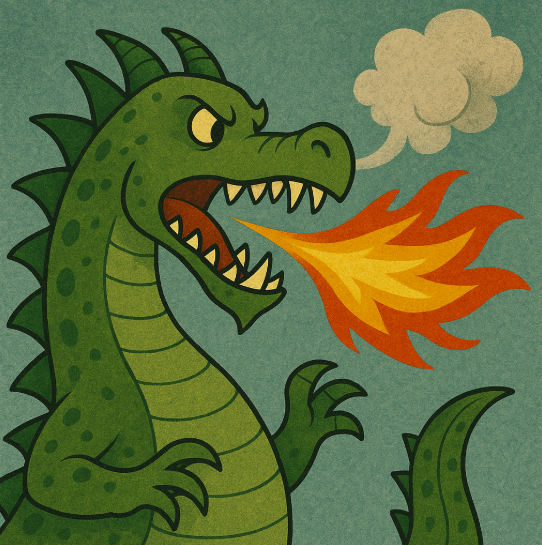
Custard the dragon had big sharp teeth,
And spikes on top of him and scales underneath,
Mouth like a fireplace, chimney for a nose,
And realio, trulio daggers on his toes.
Explanation
Here the poet has described the dragon, how it looked. So the dragon had big sharp teeth. He had spikes on top of his body and under those spikes were the scales. His mouth was like fireplace. His nose was like a chimney. And his toes were no les than daggers.
Stanza 4
Belinda was as brave as a barrel full of bears,
And Ink and Blink chased lions down the stairs,
Mustard was as brave as a tiger in a rage,
But Custard cried for a nice safe cage.
Explanation
In this stanza, the poet talks about the bravery of the characters. He says that Belinda was as brave as a group of bears. Ink and Blink were so brave that they could even hunt lions — meaning the poet has shown a small kitten and a tiny mouse as being more powerful than a lion. The dog, Mustard, is described as brave like an angry tiger.
Stanza 5
Belinda tickled him, she tickled him unmerciful,
Ink, Blink and Mustard, they rudely called him Percival,
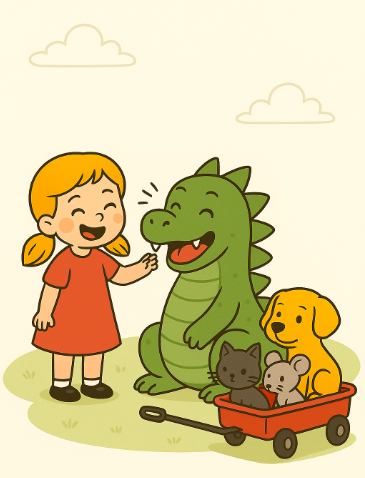
They all sat laughing in the little red wagon
At the realio, trulio, cowardly dragon.
Explanation
Belinda often tickled the dragon in a very cruel way. Ink, Blink, and Mustard also made fun of him and compared him to a knight named Percival, who was considered brave but ran away due to a lack of courage. They all used to tease the dragon while sitting in their little red wagon.
Stanza 6
Belinda giggled till she shook the house,
And Blink said Weeck! which is giggling for a mouse,
Ink and Mustard rudely asked his age,
When Custard cried for a nice safe cage.
Explanation
The poet says that Belinda laughed so loudly that her voice echoed throughout the house. Blink, the mouse, when he laughed, made a “weeck” sound. On the other hand, Ink and Mustard made fun of Custard — whenever he asked for a safe cage, they teased him and mockingly asked his age.
Stanza 7
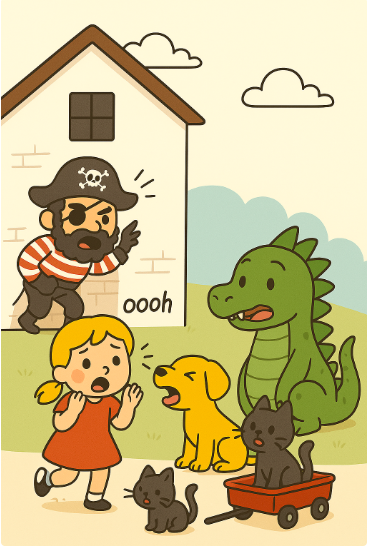
Suddenly, suddenly they heard a nasty sound,
And Mustard growled, and they all looked around.
Meowch! cried Ink, and ooh! cried Belinda,
For there was a pirate, climbing in the winda.
Explanation
While everyone was making fun of the dragon, they suddenly heard the sound of someone entering the house. When they looked toward the window, they saw a pirate climbing up the wall. Mustard, the dog, started barking at him, and Ink, the kitten, meowed at him. Belinda, frightened, screamed “Ooh!” because everyone was scared of the pirate, who is known for robbing ships.
Stanza 8
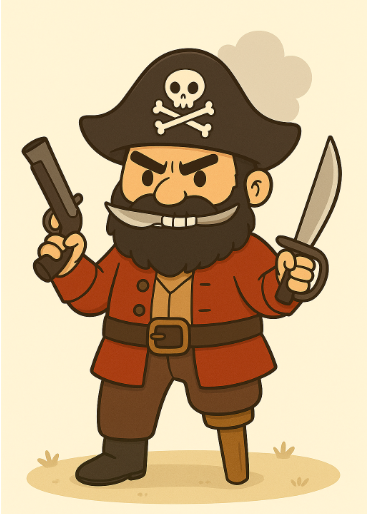
Pistol in his left hand, pistol in his right,
And he held in his teeth a cutlass bright,
His beard was black, one leg was wood;
It was clear that the pirate meant no good.
Explanation
The poet describes the appearance of the pirate. He says that the pirate had handguns in both hands and also carried a small sword. A cutlass is a short sword with a curved blade. He held the sword between his teeth. He had a black beard and one wooden leg. This means that the pirate was a disabled person, yet he managed to frighten everyone. Moreover, his intention was to harm them.
Stanza 9
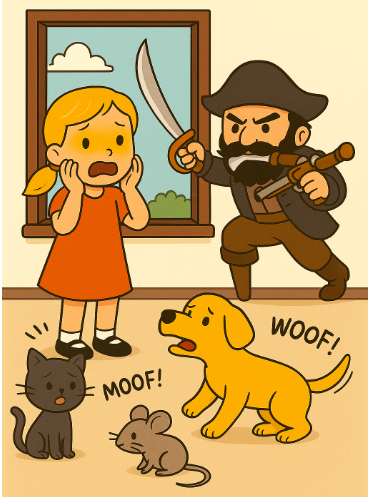
Belinda paled, and she cried Help! Help!
But Mustard fled with a terrified yelp,
Ink trickled down to the bottom of the household,
And little mouse Blink strategically mouseholed.
Explanation
When everyone saw the pirate, they got scared. Belinda was so frightened that her face turned pale, and she started calling for help. Mustard, the dog, also began barking and crying for help. Ink, the kitten, ran straight down to the bottom of the house as if she had already planned her escape. And Blink, the mouse, quickly slipped into his little mouse hole to save himself.
Stanza 10
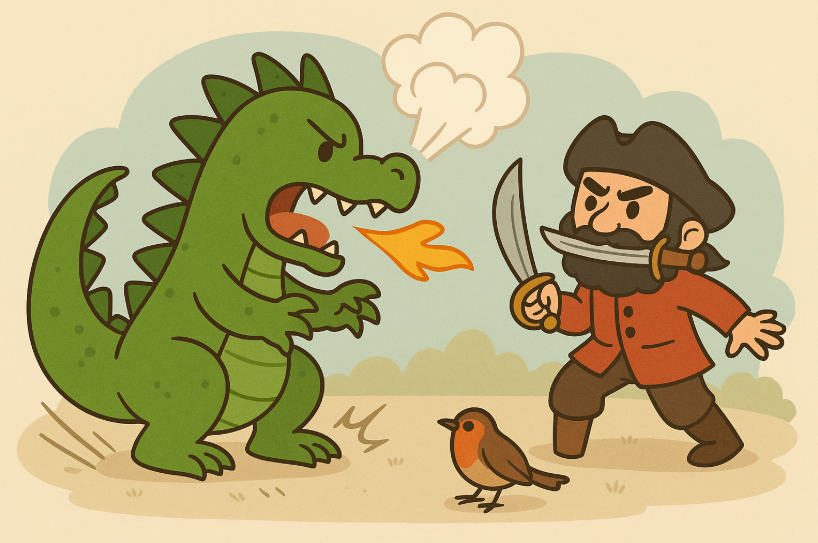
But up jumped Custard, snorting like an engine,
Clashed his tail like irons in a dungeon,
With a clatter and a clank and a jangling squirm,
He went at the pirate like a robin at a worm.
Explanation
All the characters who were earlier shown as brave got scared and ran away. But at that moment, the dragon did the most unexpected thing. Custard jumped on the pirate and made a loud sound through his nose, just like an engine running. Not only that, he banged his tail on the ground with such force that it made a noise like iron chains clashing in an underground dungeon. Then he attacked the pirate, just like a robin bird attacks worms.
Stanza 11
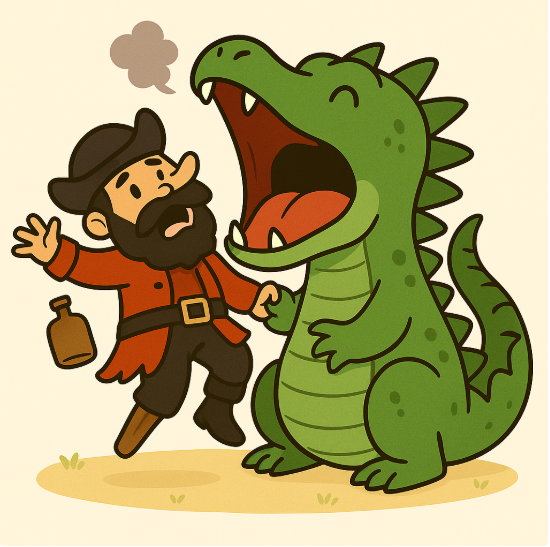
The pirate gaped at Belinda’s dragon,
And gulped some grog from his pocket flagon,
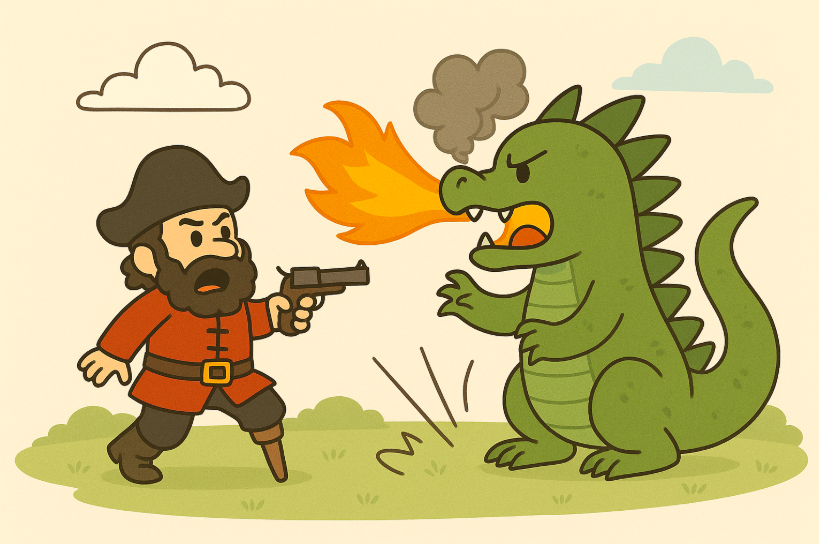
He fired two bullets, but they didn’t hit,
And Custard gobbled him, every bit.
Explanation
The pirate was so shocked by the dragon’s reaction that his mouth remained wide open in surprise. To gather some courage, he took out a container from his pocket and drank some alcohol. After gaining a little confidence, he fired two bullets at the dragon, but both missed the target. Then Custard, the dragon, bravely ate up the entire fierce-looking pirate.
Stanza 12
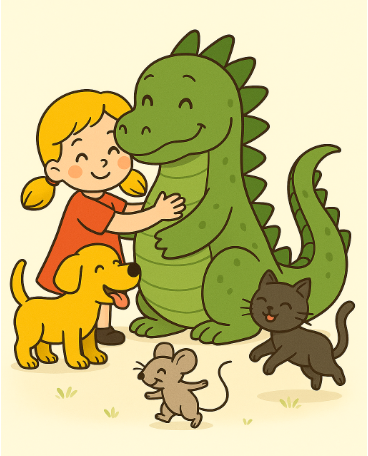
Belinda embraced him, Mustard licked him,
No one mourned for his pirate victim.
Ink and Blink in glee did gyrate
Around the dragon that ate the pirate.
Explanation
When the pirate was dead, Belinda hugged the dragon, and Mustard started licking him. No one felt sad about the pirate’s death — instead, everyone was happy. Ink and Blink ran around the dragon joyfully, almost as if they were dancing with excitement. In this stanza, the poet shows that all the characters who used to tease Custard were now expressing their happiness and gratitude, as he had saved all their lives.
Stanza 13
But presently up spoke little dog Mustard,
I’d have been twice as brave if I hadn’t been flustered.
And up spoke Ink and up spoke Blink,
We’d have been three times as brave, we think,
And Custard said, I quite agree
That everybody is braver than me.
Explanation
After thanking the dragon and showing him love, everyone went back to their old attitude. They remembered how they used to make fun of Custard for being a coward, and now they were the ones praising him. Then Mustard, the dog, said that he was just a bit confused, otherwise he would have been twice as brave as Custard. Ink and Blink also claimed that they would have been three times braver than Custard. To this, Custard the dragon humbly agreed and said that yes, everyone else was indeed more powerful and brave than him.
The dragon had saved everyone’s life, and at first, they praised him, but after a while, they all started making excuses — just like after a cricket match when everyone says, “If I had got the chance, I too would have hit a six!”
Stanza 14
Belinda still lives in her little white house,
With her little black kitten and her little grey mouse,
And her little yellow dog and her little red wagon,
And her realio, trulio little pet dragon.
Explanation
After this entire heroic episode, everything returns to how it was before. Belinda still lives in her little white house with all her pets. Gradually, everyone starts underestimating Custard again, forgetting his bravery and treating him just like the timid dragon they used to make fun of.
Stanza 15
Belinda is as brave as a barrel full of bears,
And Ink and Blink chase lions down the stairs,
Mustard is as brave as a tiger in a rage,
But Custard keeps crying for a nice safe cage.
Explanation
In this stanza, the same lines from the fourth stanza are repeated. The poet says that life has once again become normal. Everyone is still shown as brave, while Custard, the dragon, is again portrayed as a coward who always wants to stay safe inside his cage.