 by
by Short Summary of the Poem
Adrienne Rich’s poem “The Trees” is a symbolic piece that highlights the themes of freedom and independence.
The poet explains how humans, driven by selfish needs, have confined trees within their homes — even though their true home is the forest. These trees eventually break free from their restrictions and return to the wild where they belong.
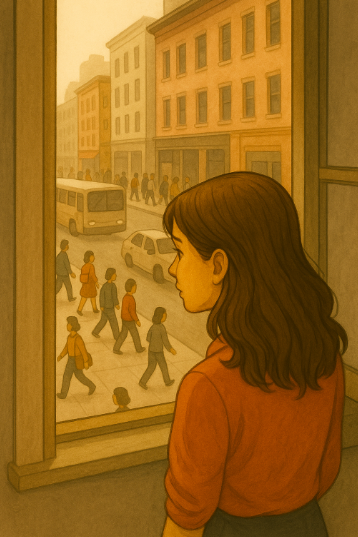
Symbolically, the poem conveys that every individual — especially women — carries within them a powerful urge to reclaim their freedom and individuality. The poem beautifully captures the conflict between control and the desire for independence, making it both personal and universal in its message.
Main Theme of the Poem
The poem “The Trees” by Adrienne Rich highlights the central theme of freedom and independence.
The poet shows how humans, driven by selfish motives, have confined trees within the four walls of their homes, forgetting that the true home of trees is the forest. These trees, breaking all restrictions, begin their journey back to their natural home — the forest.
Symbolically, this struggle represents every individual’s (especially women’s) fight to reclaim their individuality and freedom. Through nature, the poem gives a universal message — that control can never be permanent, and the struggle for freedom always leads to victory and self-liberation.
Poetic Devices used in the Poem
- Personification: For example, Sun bury it’s feet. Sun has been personified. In second stanza, twigs and boughs have been personified.
2. Enjambment– when there is no punctutaion mark at the end of the lines in a poem.
3. Imagery: The poetic device used that helps the readers to form picture in their minds while reading. For example- “The trees inside are moving out into the forest”
4. Simile: The poetic device where comparison is done using like or as. For example, in the poem,
- Trees are compared to patients (like newly discharged patients).
- The moon is compared to a mirror (Moon is broken like a mirror).
- And next the poet has tried to create a scene in which she is observing all the things happening (the night is fresh…… in the rooms)
5. Alliteration: The poetic devices where the consonant sounds are repeated. For example,
- I sit inside, doors open to the verandawriting long letters.
- I scarcely mention the departure of the forest from the house.
- The night is fresh, the whole moon shines in a sky still open.
- The smell of leaves and lichen
Poem
The trees inside are moving out into the forest,
the forest that was empty all these days
where no bird could sit
no insect hide
no sun bury its feet in shadow
the forest that was empty all these nights
will be full of trees by morning.
Explanation
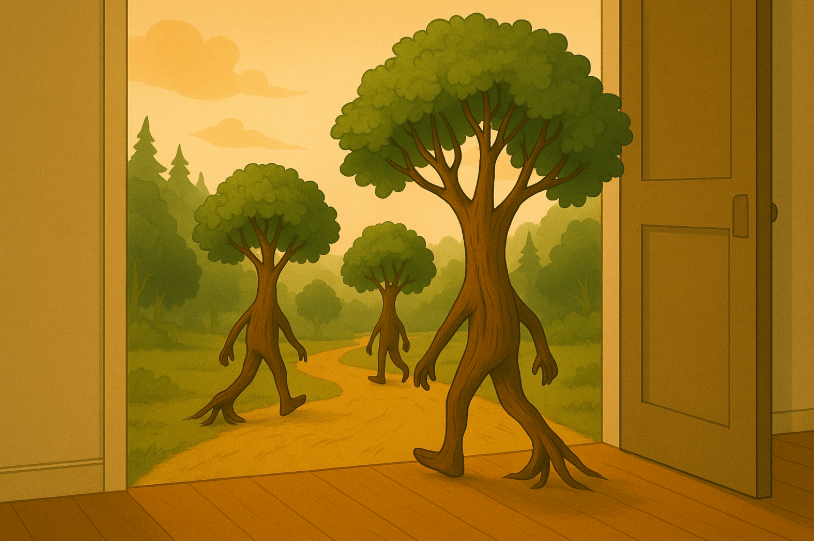
The poet says that the trees, once confined within the four walls of a house, are now breaking free and moving toward their real home — the forest.
Literal meaning: The forest had been empty for a long time — no birds sat on the branches, no insects hid in the bark, and the sunlight never disappeared beneath the shade of trees. But now, as the trees return, by morning the forest will come alive again, vibrant and full of life.
Symbolic meaning: Just as the trees break free from captivity and return to the forest, humans (especially women) break their own limitations to reclaim their freedom and individuality.
Poem
All night the roots work
to disengage themselves from the cracks
in the veranda floor.
The leaves strain toward the glass
small twigs stiff with exertion
long-cramped boughs shuffling under the roof
like newly discharged patients
half-dazed, moving
to the clinic doors.
Explanation
The poet describes how the trees struggle all night to free themselves from the house. The roots try to pull away from the veranda floor, the leaves lean toward the glass window, and the branches use all their strength to push outside.
Here, the poet uses a simile — comparing the branches to patients who, upon being released from the hospital, feel confused and half-conscious but still eager to breathe the fresh air outside. Similarly, the trees move slowly out of the house, almost in disbelief that they are finally returning to their true home — the forest.
Symbolic meaning: This struggle represents a desperate attempt for freedom — whether it’s the trees breaking away from confinement or humans (especially women) breaking through old restrictions to live a new, liberated life.

Poem
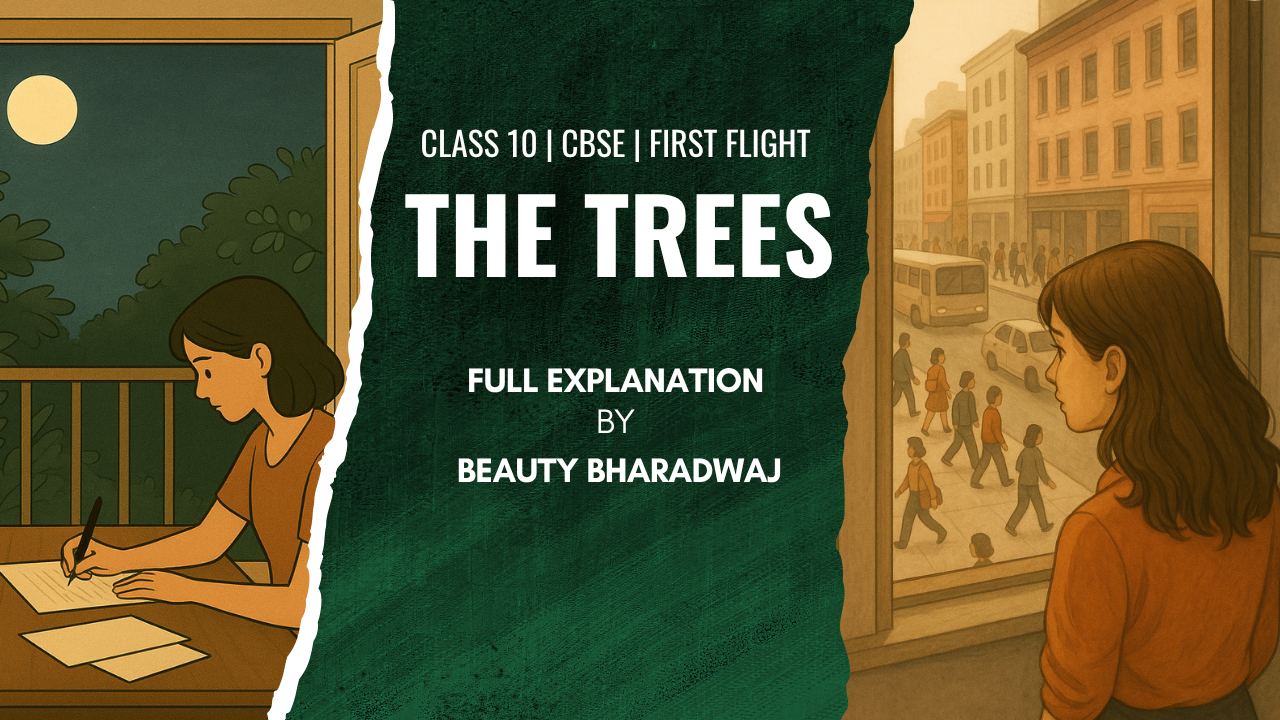
I sit inside, doors open to the veranda
writing long letters
in which I scarcely mention the departure
of the forest from the house.
The night is fresh, the whole moon shines
in a sky still open
the smell of leaves and lichen
still reaches like a voice into the rooms
Explanation
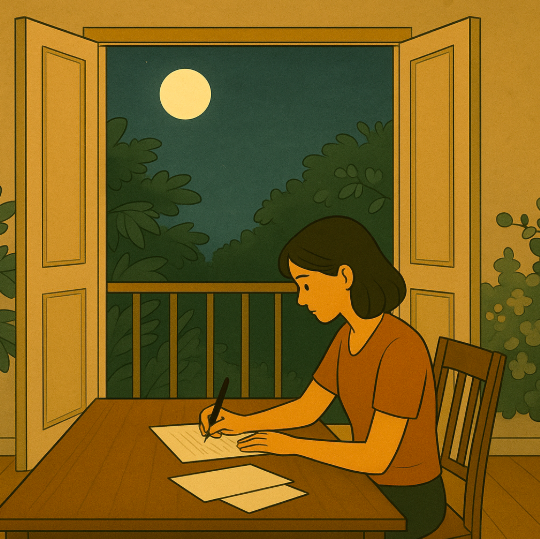
The poet sits on her veranda, writing long letters, but she doesn’t mention the departure of the trees in her writing.
Outside, the night feels fresh — the full moon is shining brightly, and the fragrance of leaves and lichen (a type of fungus that grows on trees) drifts into the rooms, almost like a voice whispering that nature is demanding its freedom back.
Symbolic meaning: The poet indirectly suggests that even if people choose to ignore it, nature continues to give clear signs of its longing for freedom.
Poem
My head is full of whispers
which tomorrow will be silent
Listen. The glass is breaking.
The trees are stumbling forward
into the night. Winds rush to meet them.
The moon is broken like a mirror,
its pieces flash now in the crown
of the tallest oak.
Explanation
The poet says that the whispers of the trees echo in her mind — but by the next day, these sounds will turn into silence because the change will already have taken place.
Then she says, “Listen!” — as if a great moment is unfolding. The sound of breaking glass is heard; the trees finally stumble and move out, while the wind welcomes them warmly.
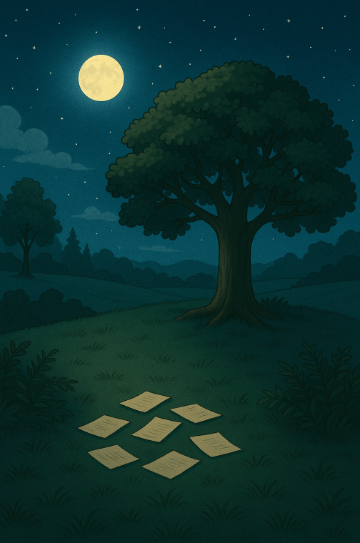
Climactic imagery: The moon is described as if it were a broken mirror, its pieces shining like jewels on the crown of the tallest oak. This striking image symbolizes victory and freedom — as though the trees have finally won their independence.
Symbolic meaning: This stanza reveals that the struggle for freedom can be painful — breaking glass, stumbling — but in the end, nature inevitably reclaims its right to be free.
Remember these points for the exam-
- Trees = freedom & independence
- Roots, leaves, branches represent = struggle to break restrictions
- Glass breaking = breaking barriers of control
- Moon crown on oak = victory of nature, symbol of independence
- Poetic devices: Simile, Personification, Metaphor